











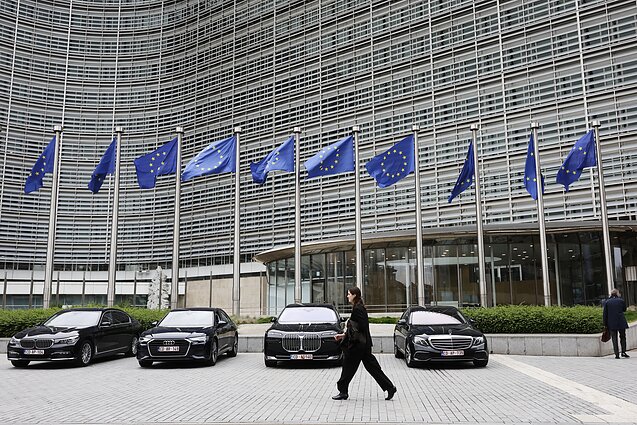
The European Union is still failing to agree on its 21st package of sanctions against Russia, with Lithuania’s ambassador to the bloc saying signs of European fatigue with pressuring the Kremlin are becoming increasingly apparent.
Lithuania is among the few countries backing the toughest possible sanctions against Russia, with ambitions ranging from closing European borders to Russian soldiers to banning the transport of Russian liquefied natural gas. But Lithuania’s ambassador to the EU says Europe is growing tired of punishing the Kremlin.
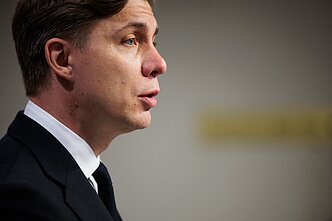
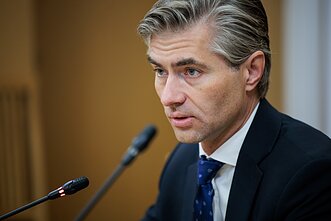
“The argument heard most often is that sanctions should not harm European countries and their economies compared with Russia,” says Lithuania’s ambassador to the EU, Nerijus Aleksiejūnas.
As a result, restrictions on Russia’s fishing sector have already been dropped from the sanctions package, while Bulgaria is vetoing sanctions against Russian Orthodox Patriarch Kirill.
France, Italy and Spain are the main opponents of a ban on Russian soldiers entering Europe. They issued the most visas to Russian citizens last year.
A compromise appears likely, with the decision postponed until the autumn and handed over to the European Commission, where no member state will be able to veto it.
“The best way to solve this problem is through changes to the visa code, where all the rules are set out,” says Aleksiejūnas.
The European Commission’s proposal to ban EU countries from transporting Russian gas and selling tankers to Russia has caused the most controversy. Greece, which manufactures specialised liquefied natural gas tankers, opposes the move.
“Those ice-class vessels capable of transporting Russian liquefied natural gas are specifically designed for the Arctic, and no other country or company apart from Russia is carrying out projects in the Arctic,” says Petras Katinas, an analyst at the Royal United Services Institute (RUSI).
Having failed to persuade Athens, the EU is considering allowing an exemption. Greece not only supplies tankers to Russia but also transports Russian gas, worth €2bn last year.
“The Greeks are the biggest service providers for Russian LNG,” Katinas says.
The gas storage facilities that were depleted during the unusually cold winter are also causing problems. As a result, Russian gas is in demand.
This year, imports from Russia were almost a fifth higher than last year, with the EU paying Russia nearly €6bn for it. However, imports of Russian gas will be banned from next year.
“More gas is being bought ahead of the ban – we saw the same thing before the previous ban,” Katinas says.
There is also debate over the price cap on Russian oil.
Lithuania’s aim is to keep it frozen at $44 a barrel. If it were recalculated, it would rise to $60, as the EU’s current limit is set at 15% below the market price. Greece, Malta and Cyprus, however, do not want the price cap to remain frozen.
“The signal being sent is that they are backing away from their own sanctions,” Katinas says.
Lithuanian diplomats say that despite the disagreements, there are also areas of consensus.
“The aim is to restrict Russia’s financial market, its access to capital and its access to alternative sources of financing such as cryptocurrencies. Well, there is much more in the package,” Aleksiejūnas says.

Newsletter
Every Friday morning.