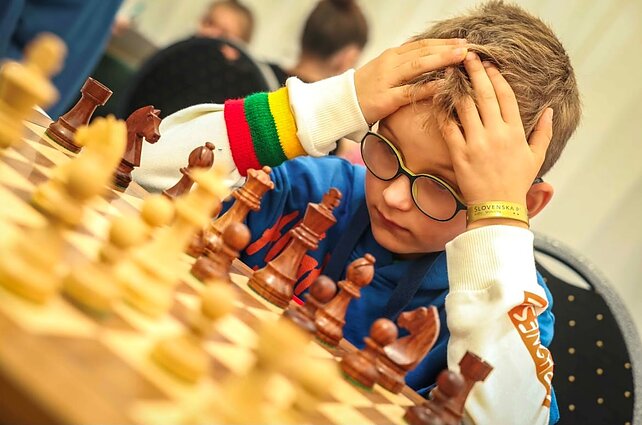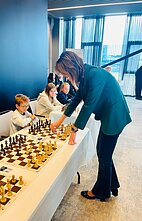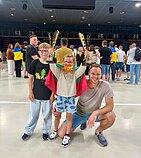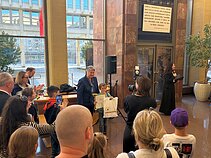














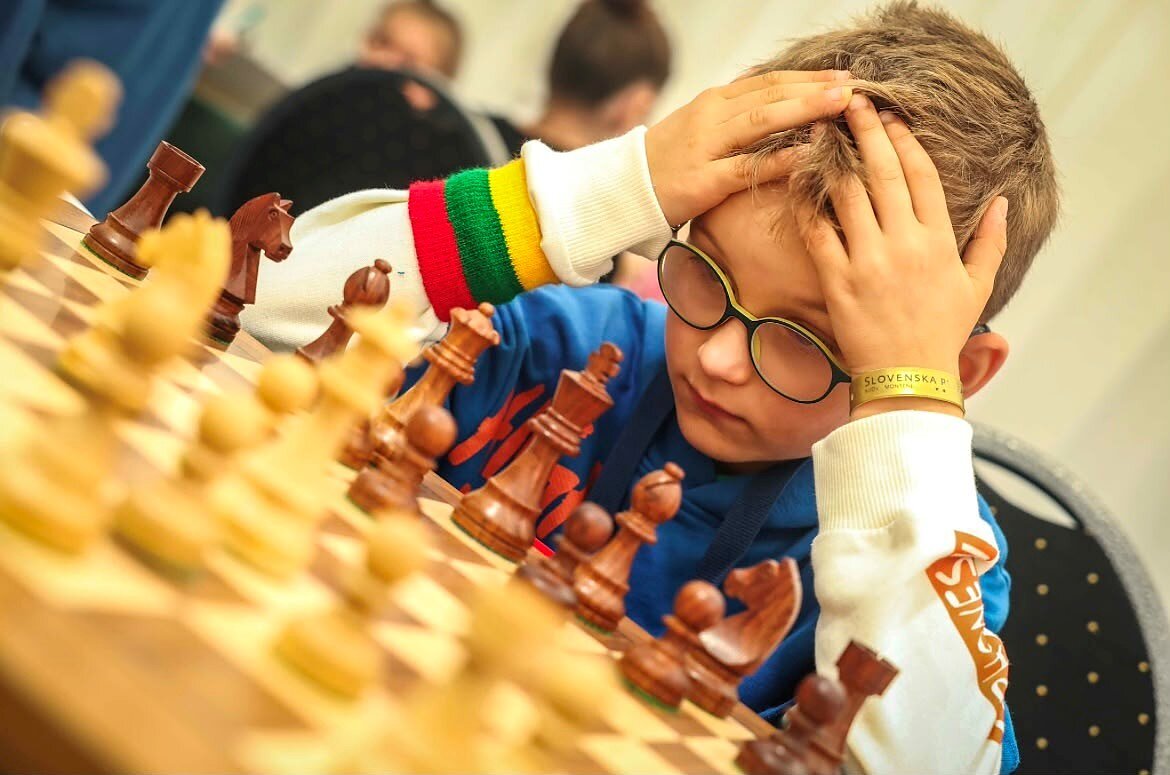
A seven-year-old boy from Lithuania, Nikolas Bausys, has won two European chess titles at a single tournament, having first sat down at a chessboard at the age of four.
Chess has become something of a family tradition for the Bausys household over the past few years, and according to his father, the game holds more appeal for the children than watching cartoons.
Nikolas recently achieved standout results at the European rapid and blitz chess championships, held in Poland. In the rapid event he scored 8.5 points out of a possible 9, winning eight of his nine games and drawing one, to take first place.
The following day, still riding high and living up to his billing as favourite, he won the blitz competition with a perfect score of 18 out of 18.
"It's not often a player achieves a maximum score. Nikolas managed to win two championship titles at a single tournament. We came home on a real high," said his father, Marius.
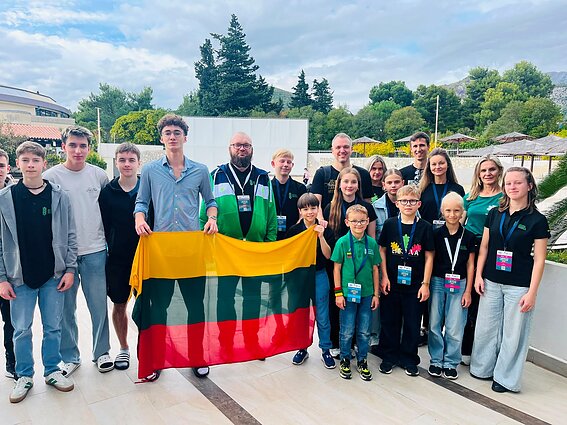
According to Marius, Nikolas himself did not make a fuss about the wins.
"Nikolas usually plays in adult tournaments, or against older children, so this tournament felt easy to him. That's why he didn't dwell on the win – you could say it was just another day at the office for him. He said it was a tournament like any other, it wasn't hard, and that was that," his father said with a smile.
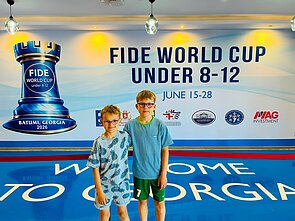
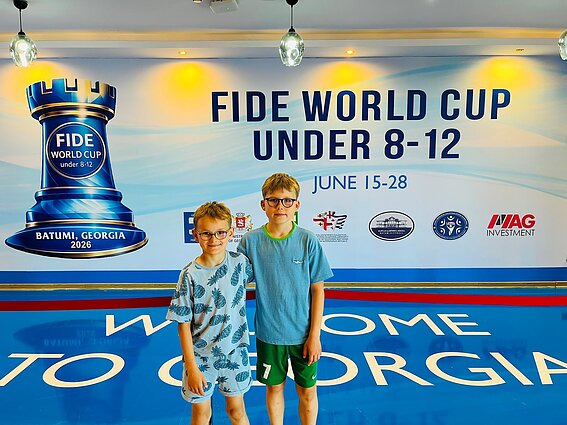
It was not Nikolas's only competition this month – in early July he took part in the World Classical Chess Championship in Georgia, where he finished sixth.
"It's a good result, of course, but expectations had been higher, so we came back from there in reasonably good spirits," his father admitted.
He more than made up for it in Poland shortly afterwards.
Inspired by his brother
Nikolas took up chess at the age of four, inspired largely by his older brother, Benas, who has also played since the age of five and has achieved strong results in tournaments of his own.
"Benas did well. He'd come home with cups, prizes, Lego sets. He became Lithuanian champion. Nikolas saw that his brother was getting attention for playing chess, and I think that was the main motivation.
It turned out that his older brother's influence on Nikolas's development was huge, because our middle son kept trying to match his elder sibling," said Marius, who is raising three sons with his wife.
Alongside Benas and Nikolas, the family also has a younger son, Vincentas.
From the moment he began playing, Nikolas stood out as a highly motivated player, earning an international rating from the International Chess Federation (FIDE) at the age of just five.
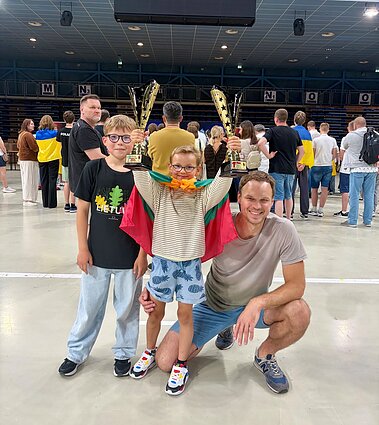
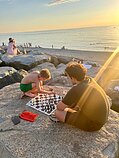
"Chess was always part of our family life. For instance, after coming home from nursery, the children would sit down to play chess instead of watching cartoons.
We, as parents, never push them into it – for the children, chess is a way to relax, to have fun, a way of connecting with each other," said their father.
Grandparents and an aunt drawn in too
Marius admits he was the one who first introduced chess into the family.
"I'm not a chess player myself, but I've enjoyed playing since childhood, though I didn't play for a long time afterwards. Then came the Covid years, and chess came back into my life – I started playing online, and took part in an in-person tournament too. That's when Benas saw it, got interested, and we started playing together.
A few years ago we had nothing to do with chess, apart from the fact that I knew how to play. Now not just my wife, the children and I, but the whole extended family, are deeply into it," he said, describing how the family's passion for chess took hold.
These days, family weekends are often spent not at home but at chess tournaments. Both sons, for instance, are currently away at a tournament near Lake Plateliai, in western Lithuania, where they were seen off by their aunt, Marius's sister.
"Grandparents on both sides have got involved too. Now that the children are a bit older, we also let them go away with just their coaches. It's become a whole ecosystem," said Marius.
'The little one who's good at it'
"Nikolas is known in the chess community. He's 'the little one who's good at it.' You could say he's already at the level of a decent adult chess player, and that takes real effort," his father said with a smile.
A year ago, at the age of six, shortly before his seventh birthday, Nikolas achieved a notable win against an international master during a rapid chess game at an official tournament.
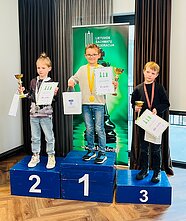
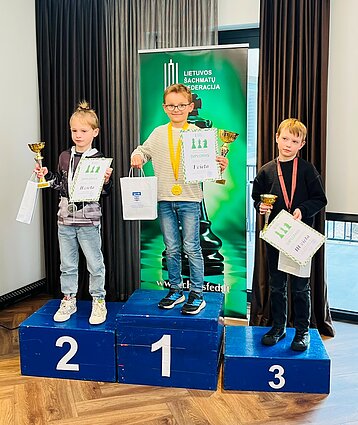
"That was an unusual moment, let's say, but there have been plenty of wins besides. For two years running, Nikolas has become Lithuanian champion in his age group. He now holds all three titles – classical, blitz and rapid. He won all three this year, and last year too. Before that he was simply too young," said Marius.
He is glad the children were never pushed towards the chessboard – the desire came from them, their enthusiasm grew naturally, and it was left to the parents simply to let them play and not hold them back.
"And everything that's grown out of that is a wonderful thing to see," said Marius.
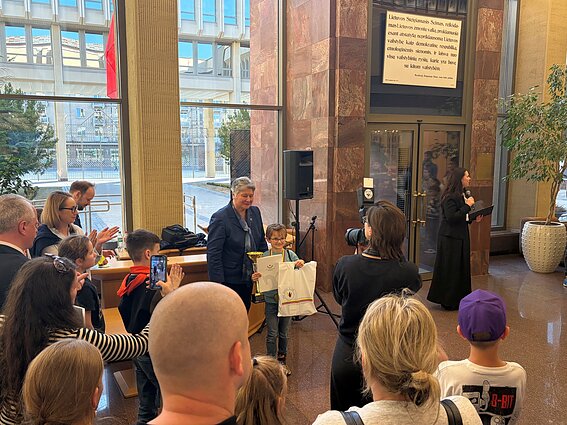
Building concentration and responsibility
Marius is convinced that chess instils a number of qualities useful in life more broadly.
"Our chess journey hasn't been that long, so more experienced chess players might offer better insights, having lived a chess player's life from childhood into adulthood and now guiding their own children through it. But it seems to me that chess develops a few particular qualities.
First, concentration. These days, I think, there's a real lack of it. We live in a time when there's so much information – you get an email and only read the first line, you don't watch a full video, you watch short clips instead.
But chess draws children in, especially boys, who tend to be quite restless, and they learn to focus, to concentrate. Especially since classical games can last three, four, five hours," said Marius.
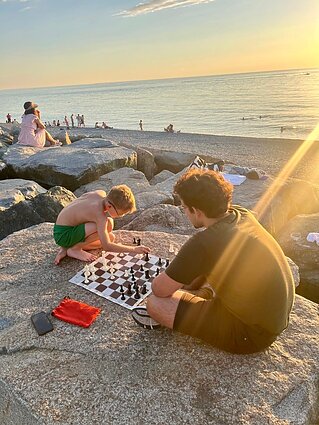
He also believes chess fosters a strong sense of responsibility. Sitting alone at the board, a player makes every decision alone and is accountable for everything.
"If things go wrong, you can never say it was a team-mate's fault, that they didn't pass you the ball. You have to take responsibility yourself. It takes children time to learn that, but they do learn it.
There are a lot of tears in competitive chess, because sooner or later you lose – many times. So you also have to learn to manage your emotions, to come to terms with defeat, with your own mistakes, sometimes very frustrating ones, and to accept setbacks," he said.
Chess also builds another important skill, Marius says – making sound decisions under time pressure.
"You have limited time to decide. Every game reaches a stage where you have to make a decision very quickly. You'd like more time to think, but you have to make your move here and now.
That skill, and others like it, carry over into other areas of life. You start to understand that you won't always have all the information you need, that you won't always be able to make the best possible decision – but you have to act on what you do know, and still make a decision here and now, whether in business or at work.
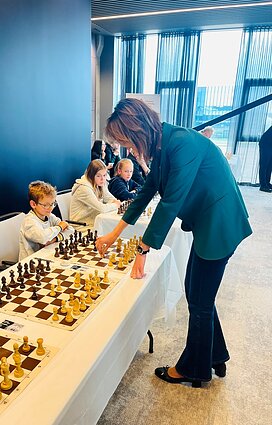
How far the children manage to apply that, of course, we'll only see later," said Marius.
The boys have not yet decided what they want to do when they grow up. Besides chess, Nikolas also plays football – a sport he both enjoys and is good at – and goes swimming, having previously tried karate and dancing too.
"It complements chess. I think it's very important to have physical activity as well," said Marius.
'Chess is both an exact science and an art'
Asked how many chessboards the family has at home, Marius needs a moment to count.
"One, two, three. Definitely four. But we've also given quite a few away to grandparents, and to the office," said the father of two chess players.
He and his wife are both economists by training, and Marius works in finance.
"But I don't think that's really connected. A chess player can flourish just as well in a family of humanities graduates. Chess is both an exact science and an art, all rolled into one," Marius concluded.

Newsletter
Every Friday morning.