












LRT English Newsletter – May 15, 2026.
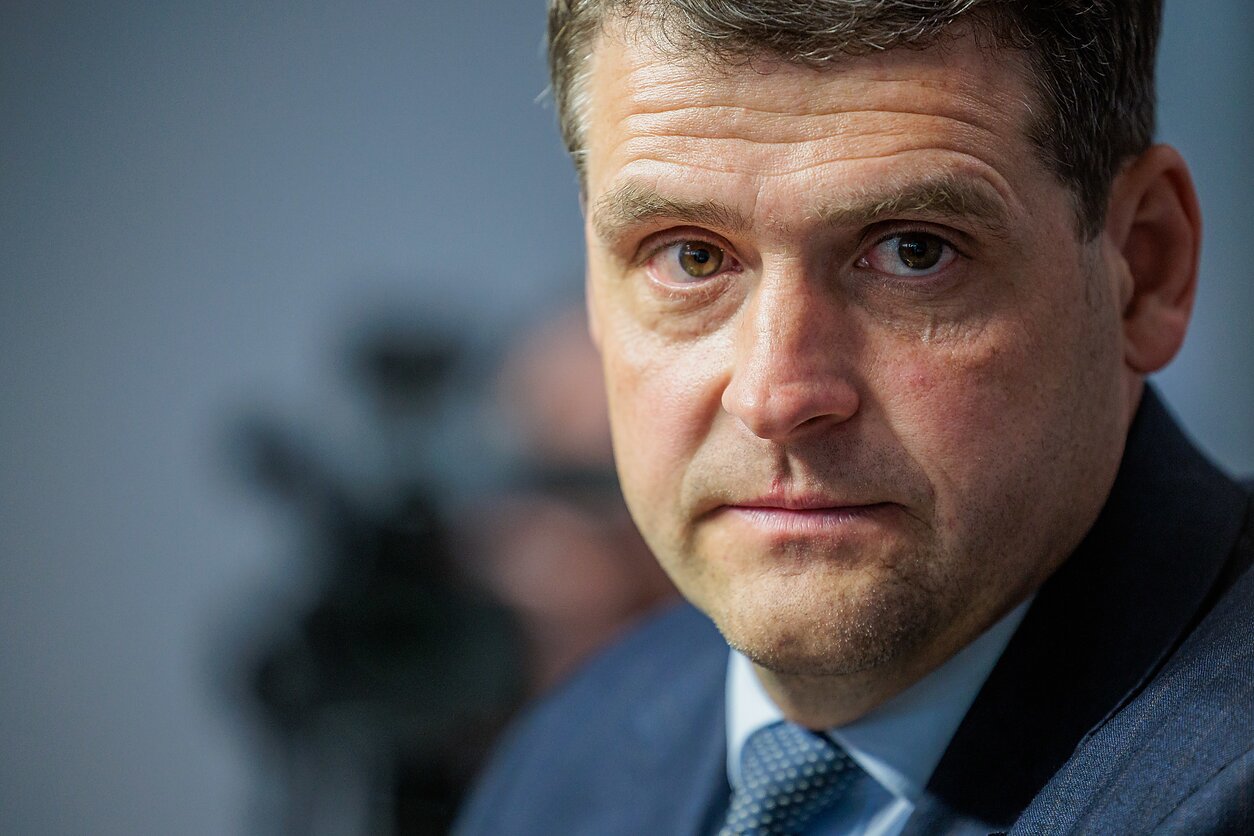
Lithuania's Financial Crime Investigation Service raided the parliamentary offices, party headquarters, and private home of Nemunas Dawn leader Remigijus Žemaitaitis on Thursday morning, seizing phones, computers, and boxes of documents. His colleague and fellow MP Daiva Petkevičienė was also searched.
The investigation, underway since March, focuses on potential fraud – specifically whether Žemaitaitis and Petkevičienė committed a crime by leasing their personal vehicles to the party. No charges have yet been filed.
The case has a history. The Central Electoral Commission already ruled in March that the party had misused state funds and could not document nearly 50,000 euros in expenses, stripping Nemunas Dawn of its 241,800-euro state grant for the period and ordering the two MPs to personally repay tens of thousands of euros. The party is appealing that decision in court.
Žemaitaitis, emerging from his home after the early-morning raid, was characteristically unbothered – telling reporters the officers found nothing, and that nothing will come of their searches. President Gitanas Nausėda was considerably less relaxed, describing Nemunas Dawn as a party that is, in his words, a perpetual conveyor belt of scandals and legal cases. Nemunas Dawn is a member of the Social Democrat-led governing coalition, whose partners have called for the situation to be discussed internally.
MORE ON ACCOUNTABILITY:
– Ex-PM Gintautas Paluckas has been charged with illicit enrichment. Prosecutors allege he and his wife acquired nearly €345,000 in assets through unexplained income between 2010 and 2024. Paluckas denies the charges and says he will not resign his Parliamentary seat.
– France's Court of Cassation rejected an appeal by Vladimir Antonov, the former shareholder of the collapsed Snoras bank, clearing the way for his extradition to Lithuania. Vilnius courts found Antonov guilty of eight intentional crimes and identified him as the main organiser of a scheme that caused damages estimated at nearly 467 million euros.
– An institution owned by Vigilijus Jukna, Social Democrat and adviser to Prime Minister Ruginienė, received EU funding for farmer training sessions that were repeatedly held without any attendees. The financial crimes watchdog has since conducted searches at his premises.
– Police searched the home and office of Adomas Bužinskas, director of the Vilnius city municipality administration, as part of a pre-trial investigation into possible abuse of office linked to the continued use of a street design standard that a court had ruled was not legally in force. He has filed a complaint about the police actions, saying the searches were not warranted.
LRT LAW
The controversial law governing LRT, the national public broadcaster, is moving toward a full parliament vote expected next week after Lithuania's parliamentary Committee on Culture approved amendments to the draft.
The committee approved a new management board, an expanded LRT Council growing from 12 to 15 members, shorter four-year council terms, and tighter eligibility requirements for candidates. Some of the most contentious proposals were dropped, including restrictions on other media organisations participating in LRT content and a plan tying funding to government contracts.
But key concerns remain unresolved. The number of politically appointed council members stays the same, despite calls to depoliticise the body. The committee also decided the changes would come into force immediately – a move criticised by the Venice Commission, which said that changes affecting the dismissal procedure for the director-general should apply only to future office-holders, to avoid targeting a specific individual. Current director-general Monika Garbačiauskaitė-Budrienė has argued the reforms were designed specifically to remove her.
Meanwhile, Lithuania's anti-corruption watchdog criticised a provision allowing secret ballot votes on the director-general's dismissal, arguing such decisions must remain open to public scrutiny.
AMERICAN SITUATIONSHIP
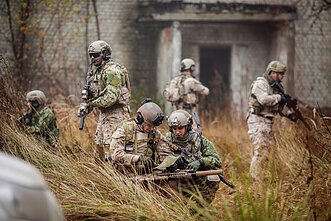
The US has paused a planned rotation of more than 4,000 troops to Europe, following the earlier announcement of a withdrawal of 5,000 troops from Germany. Lithuanian Defence Minister Robertas Kaunas moved quickly to reassure, calling the halt a temporary pause for planning purposes and pointing to the German brigade being deployed to Lithuania as evidence that the allied presence remains solid. More than 1,000 US troops are currently stationed in Lithuania.
Lithuania's preferred outcome is no secret. Foreign Minister Kęstutis Budrys argued that if US troops are leaving Germany, they should be redeployed closer to the Russian border – where their presence would have the greatest deterrence value – and said Lithuania is ready to host additional allied forces. Washington has yet to signal where the troops will go.
In the meantime, Vilnius is making its loyalty visible. Lithuania's State Defence Council approved the deployment of up to 40 troops and civilian defence personnel to an international mission securing free passage through the Strait of Hormuz, where the US is assembling a new coalition to protect commercial shipping. A parliament vote is still required to finalise the deployment.
ON SPEAKING TERMS WITH BELARUS?
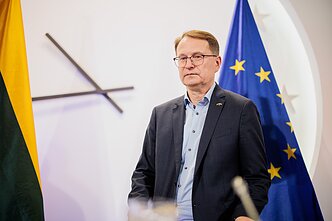
A suggestion from Social Democratic Party Chairman Mindaugas Sinkevičius that Lithuania should consider dialogue with Minsk – at least at the deputy ministerial level – has sparked a pushback from across the political spectrum.
Foreign Minister Budrys pointed to a growing list of unresolved problems, including safety concerns over the Astravyets nuclear plant. President Nausėda said he saw no positive changes on balloons, illegal migration, or Belarus' participation in Russia's war against Ukraine.
The timing did little to help Sinkevičius' case. The same week, suspected smuggling balloons near Vilnius Airport triggered temporary airspace restrictions – the ninth such incident this year. Border guards also detained 18 migrants who had entered through a tunnel dug from Belarusian territory, a method officials said is unlikely without the knowledge of Belarusian authorities.
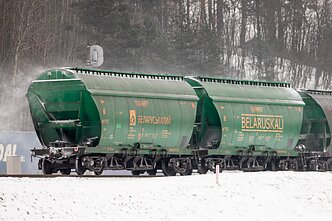
And yet the pressure to engage is real – and it is coming from Washington. Budrys himself confirmed that the US is actively pressuring Lithuania to resume transit of Belarusian fertilisers through its territory, and warned that Minsk could exploit its improving relations with Washington to increase pressure on Vilnius further.
IT’S RAINING DRONES
Lithuania does not allow, has never allowed, and will never allow any foreign power to use its airspace for drone strikes – is the message Vilnius has been repeating loudly this week, after Russian media claimed the Baltic states were letting Ukrainian drones transit their airspace to hit Russian targets.
A surge in Ukrainian drone strikes on Russian energy and military infrastructure has sent stray drones crashing into Baltic territory with increasing regularity (most recently triggering the fall of the Latvian government). Russia has used the incidents to push a story that the Baltics are complicit. NATO has dismissed that framing as disinformation, pointing to Russian electronic jamming that knocks drones off course as the far more likely explanation for why drons keep falling from the sky over the Baltic states.
BUDANOV IN VILNIUS
What Lithuania is open to is exploring the domestic production of Ukrainian-designed drones and inviting Ukrainian specialists to advise on countering the incoming ones. This follows a visit to Vilnius by Kyrylo Budanov, head of the Ukrainian presidential administration and one of Kyiv's most prominent security figures.
Budanov also pushed back on Slovak Prime Minister Fico's suggestion that Zelensky should simply call Putin if he wants to meet. A call would not happen out of the blue, he said – but if Russia was truly ready for serious discussion, Ukraine would be ready too.
DISCO NATALISM
Lithuania recorded its lowest number of births on record last year, and politicians are struggling to agree on what to do about it. The populist Nemunas Dawn party has suggested abortion restrictions should be part of any strategy, while liberals argue for measures that help families balance work and childcare. Others have called for expanded parental leave, higher childcare benefits, and broader free school meal programmes.
The government's most eyebrow-raising idea has been to fight the birth rate decline at an earlier stage – by getting Lithuanians to actually meet each other, through state-organised social events and dances.
The proposal drew online mockery, but it attempts to address one of the main reasons cited behind the fact that 40% of Lithuanians between 18 and 45 say they do not plan to have children – the inability to find a suitable partner. Other explanations include anxiety about the future and emotional unreadiness, a picture that researchers say reflects a broader deterioration in well-being, rather than anything a government campaign can easily fix.
EDITOR’S PICKS:
– Lithuanian government says it wants young doctors, but the healthcare system shuts them out.
– The case for a European Defence Union.
– Lithuanian manufacturers are in desparate need of qualified workers.
– The Lithuanian housing market has turned into the hunger games.
– Now that we’re in the Eurovision final, take a look at our past performances.
– Lithuania's ancient weaving tradition is back in fashion.
– Pride returns to Kaunas.
Written by Austė Sargytė
Edited by Benas Gerdžiūnas

Newsletter
Every Friday morning.