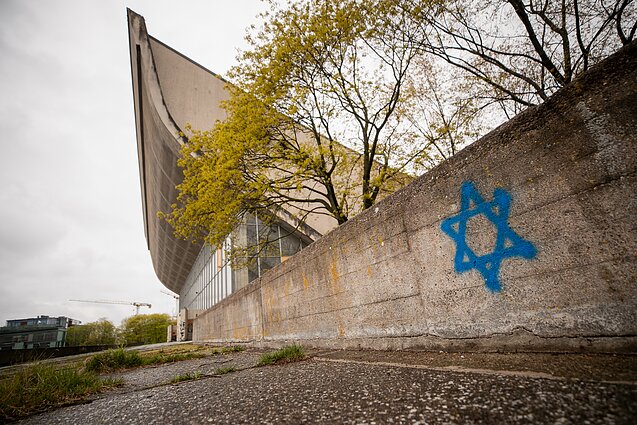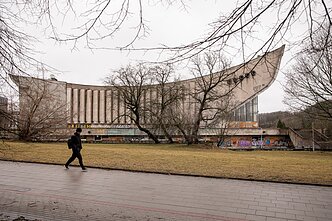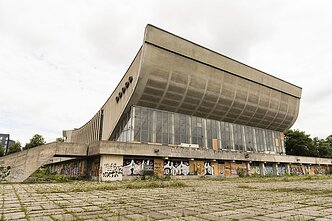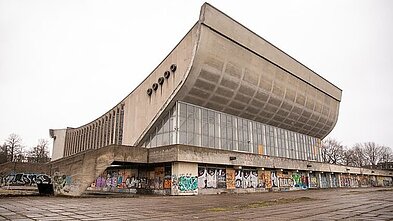















The Lithuanian government has greenlit a proposal to convert the Vilnius Palace of Concerts and Sports, a now derelict Soviet-era arena built on top of a former Jewish cemetery, into a Jewish memorial.
According to the document, approved on Wednesday, a working group tasked with coming up with a plan for the building has proposed to set up a memorial dedicated to the history of the Jewish cemetery and the people buried there.
“The building should also commemorate events that paved the way for Lithuania’s independence, which allowed stopping the destruction of Jewish cemeteries,” it says.
The Sports Palace was the venue where the Sąjūdis, Lithuania’s independence movement, was officially founded in October 1988.
The working group proposes that at least 75 percent of the memorial should be dedicated to the Jewish cemetery and the history of the Jewish community in Vilnius.
No more than 25 percent should be devoted to “the Soviet policy of desecration of cemeteries and the history of the building and its role in the Lithuanian independence movement”.
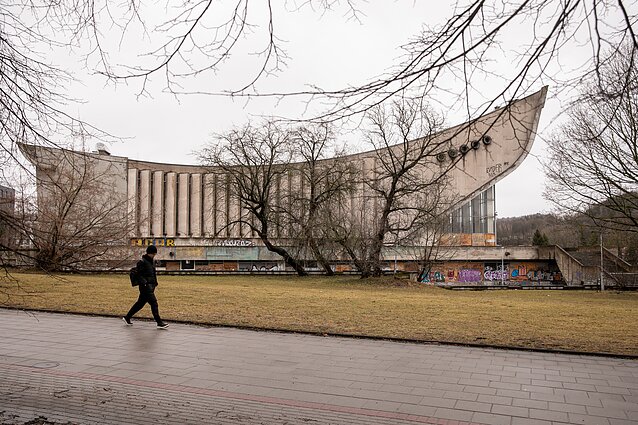
The working group agreed that the building of the Sports Palace and the Šnipiškės Jewish cemetery site should be adapted “to give meaning to memory” and opened to the public.
The special working group was appointed in April 2023.
Once the project is implemented by Turto Bankas (Property Bank), the public property management company, the Šnipiškės Jewish cemetery memorial will be transferred to the National Museum of Lithuania, according to the document.
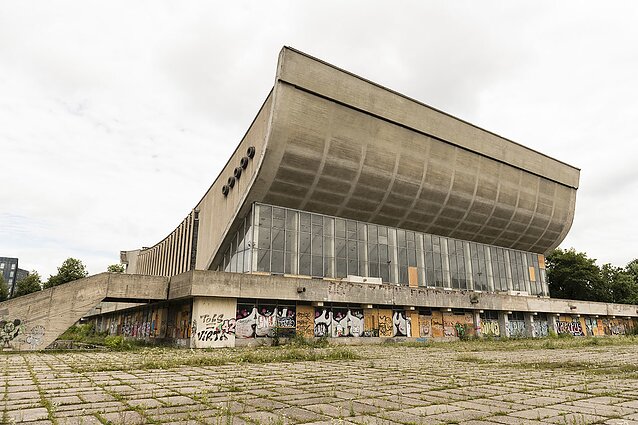
Plans call for a feasibility study for the Šnipiškės Jewish Cemetery Memorial to be worked out by November 2025 and for an international tender to be launched on February 1, 2027.
Turto Bankas took over the disused Sports Palace in 2015 from Ūkio Bankas Investment Group, which was then undergoing bankruptcy proceedings.
The plan at the time was to convert the arena, constructed in 1971, into a conference centre, but the tenders were either cancelled or fell through.
The reconstruction project also faced opposition from some Jewish communities due to its location on the site of the old Jewish cemetery, which had been in place there since the 16th century.

Newsletter
Every Friday morning.