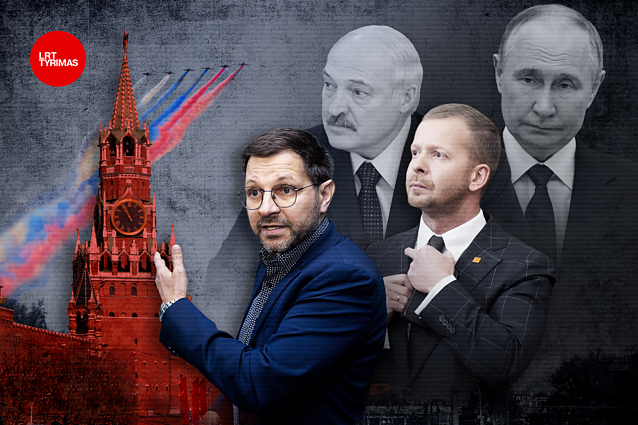









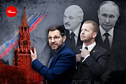

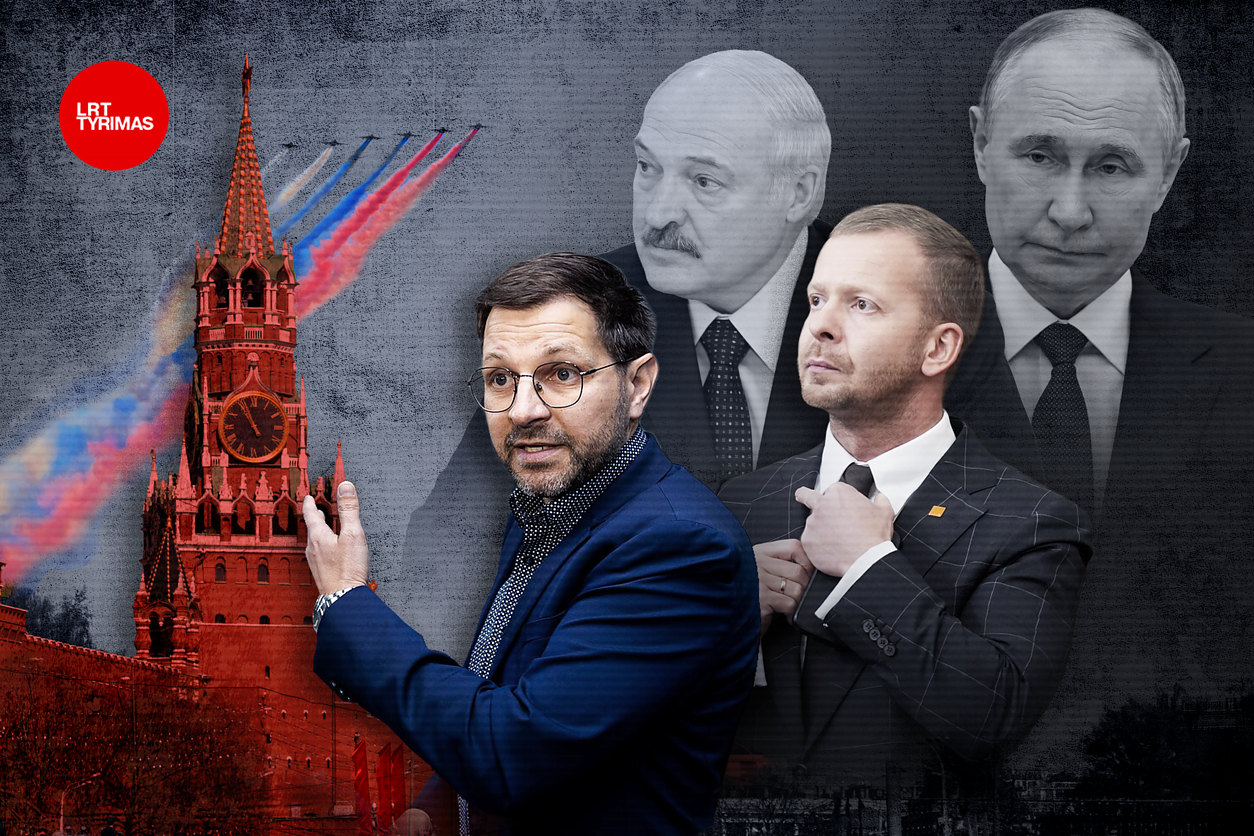
Antanas Kandrotas, who is currently on trial in Lithuania and unexpectedly travelled to Minsk in early May, has surfaced in Belarus alongside controversial Latvian politician Aleksejs Rosļikovs. The two men first established ties during the Covid-19 pandemic and, together with associates in Estonia, helped organise pro-Russian movements.
“The people who bring flowers, all those elderly people, are persecuted by various neo-fascists and neo-Nazis. The government views this positively. It is very sad that people in a neighbouring country are not allowed to celebrate their holiday,” Kandrotas said about May 9 celebrations in an interview with Belarusian state media.
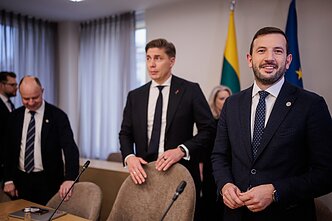
Standing beside him was Edikas Jagelavičius, an associate of Algirdas Paleckis, who was imprisoned in Lithuania for spying for Russia. Jagelavičius fled to neighbouring Belarus in 2022, earlier than Kandrotas.
Lithuania’s State Security Department (VSD) previously said Jagelavičius has not returned to Lithuania because he could face criminal liability over a visit to Russian-occupied Donbas and document forgery linked to the establishment of the International Forum of Good Neighbourhood Association.
Shortly after Russia launched its full-scale invasion of Ukraine, the organisation arranged trips to Belarus and Russia, where they met with officials, including Alexander Lukashenko.
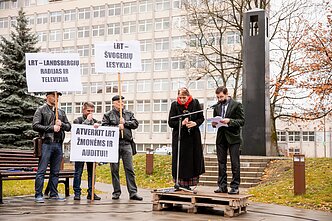
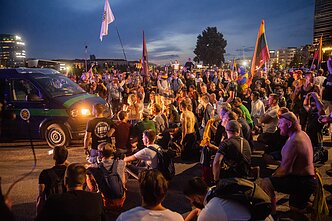
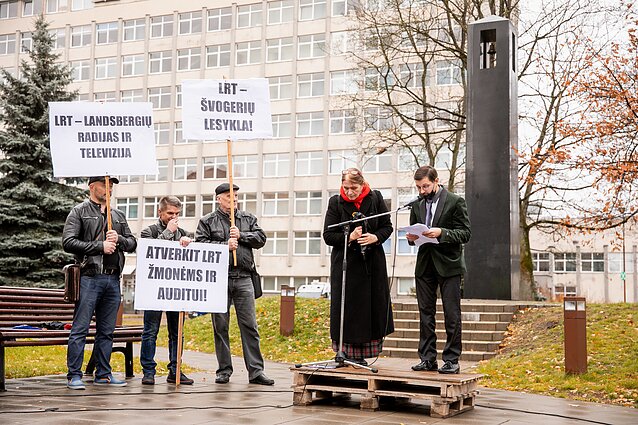
In autumn 2021, Kandrotas and Jagelavičius took part in demonstrations in support of Paleckis, who was then on trial, at Lukiškės Square and outside the LRT offices.
Documents show that after fleeing Lithuania, Jagelavičius received funding from Pravfond, a foundation established by decree of Russian President Vladimir Putin. He was presented as a defender of Russian speakers’ rights abroad.
Now, in 2026, both men appeared at a Belarusian state media programme, answering questions about Lithuania allegedly banning May 9 commemorations and “rewriting history”.
Jagelavičius said it began after 2000.
“But persecution really started after Maidan in 2014 and after the special military operation began. That is when they started destroying this holiday,” he said. “People celebrated it quietly because they understood that if they stopped doing so, they would bring this terrible war into their own homes and their own country.”
Claims that people are persecuted for marking Victory Day – one of the most important ideological holidays in Russia and Belarus – are just one of many themes Kandrotas has promoted through Belarusian state media. The message closely mirrors Kremlin propaganda narratives.
In other interviews with official regime outlets and online channels, Kandrotas repeated a range of familiar propaganda talking points.
“The people and the government are two different things: there have been so many protests, people are resisting,” Kandrotas said, repeating claims that Lithuania is supposedly a democracy while Belarus is a dictatorship, but adding that “if we had your dictatorship, everything would be fine”.
At a press conference broadcast by Sputnik, the Kremlin-backed outlet banned in Lithuania, he asked the channel to help spread information as widely as possible about what he described as the persecution of the opposition in Lithuania, meaning people like himself.
In Belarus, Kandrotas also commented on issues important to the regime, including fertiliser transit and energy policy.
“Thank you for building a nuclear power plant,” Kandrotas said. “We hope you will sell us electricity cheaply. And we will allow the transit of potash fertilisers. Those are friendly and business-like relations.”
In another interview, he claimed that Lithuania was not an independent state and would simply do whatever the Americans told it to do.
Across many of his appearances on regime-linked channels, Kandrotas also argued that Lithuania is provoking Belarus into taking a harsher stance.
Associate echoes identical narratives
Kandrotas, who has spent more than a month actively repeating standard Kremlin propaganda narratives, did not arrive in Belarus alone.
At roughly the same time, a Latvian citizen and former member of the Saeima and Riga City Council, Aleksejs Rosļikovs, also fled to Belarus.
Like Kandrotas, Rosļikovs is facing criminal proceedings in his home country.
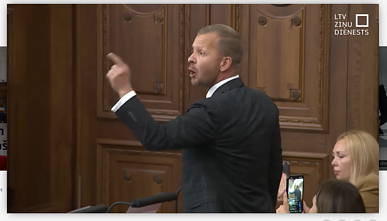
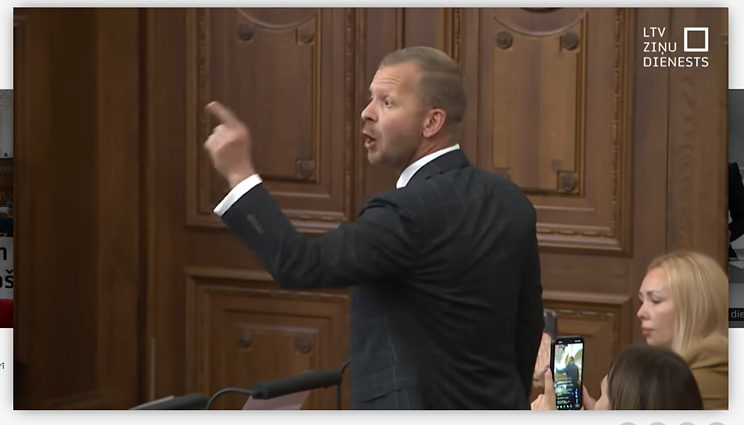
Last year, while the Latvian parliament was debating a declaration on Soviet-era Russification policies, Rosļikovs caused outrage.
He criticised the declaration and declared, in Russian, that “the Russian language is our language, and there are more of us”, before making an obscene gesture.
Videos recorded by the former Latvian politician in Belarus, where he travelled alongside Kandrotas, contain statements nearly identical to those promoted by the Lithuanian activist.
“Today, the Baltics were chosen as a new theatre of operations where provocations were being planned,” and “Europe was provoking Russia into opening a second front,” Rosļikovs said.
The rhetoric of Kandrotas and Rosļikovs frequently mirrored, sometimes almost word for word, messages recently disseminated by official Russian propaganda outlets, as well as by the Kremlin through state institutions and political leaders.
Western intelligence agencies broadly agree that the Kremlin is escalating tensions in the Baltic states through drone-related incidents and inflammatory rhetoric, seeking to intimidate and divide societies.
Russian officials have falsely claimed that Ukraine is preparing attacks on Russia from Baltic territory and that Ukrainian troops have already been deployed in Latvia.
The VSD declined to answer directly questions from LRT about whether Kandrotas and Rosļikovs travelled to Belarus in a coordinated manner to support a Kremlin information operation, saying that releasing such information could compromise intelligence activities.
However, material previously gathered by LRT suggests that the two men, both prominent on social media and known for attracting followers with provocative statements, first crossed paths during the pandemic. Their cooperation continued afterwards and intensified after Kandrotas was released from prison last year.
Experts also view their activities as part of a broader and continuing Kremlin influence operation.
According to political scientist and propaganda expert Nerijus Maliukevičius, their behaviour resembles that of an established network carrying out assigned functions.
“He performed certain functions before this. He spread various conspiracy theories, and now he is doing the same in Belarus. This is happening at the same time as Russia is conducting an active information operation against the Baltic states, particularly Latvia, over claims that its territory is being used by drones,” Maliukevičius said.
Links dating back to pandemic-era protests
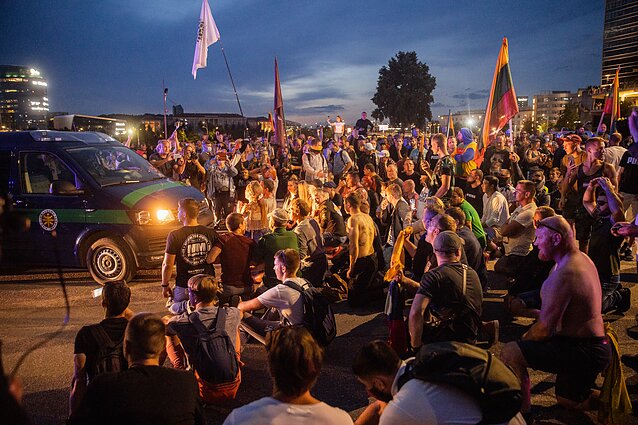
Rosļikovs travelled to Lithuania for the protest on August 10, 2021, that later escalated into riots. He was livestreaming the event.
Kandrotas played a role in organising the unrest, urging people to join demonstrators who remained outside parliament after the official protest had ended, encouraging confrontational actions and physically blocking police vehicles.
A first-instance court sentenced Kandrotas to four years in prison in the riots case.
He said he did not know Rosļikovs at the time and did not remember speaking to him at the protest. However, he said they were introduced by another Latvian around the same period.
Coincidentally or not, Rosļikovs was involved in a very similar protest in Riga in August 2021. The rally featured comparable symbolism, invoking the crimes of the Nazi regime. It did not descend into riots, although there were several provocations near state institutions.
Following the protest movements in Latvia and Lithuania, activists who described themselves as opposition figures began discussing closer cooperation.
Kandrotas was repeatedly seen travelling to Latvia to speak about the so-called family values movement and also visited Estonia, where similar protest movements were beginning to emerge.
In one video from Tallinn, Kandrotas said that “they have not yet reached our level”. In the same broadcast, he said he travelled there to advise Estonians on “how it is done”.
After Russia launched its full-scale invasion of Ukraine in February 2022, Kandrotas and Rosļikovs continued to take similar positions.
Both criticised organisations raising support for Ukraine, contrasted domestic problems with assistance to Kyiv, and campaigned against the display of Ukrainian flags on public buildings.
Estonian conference
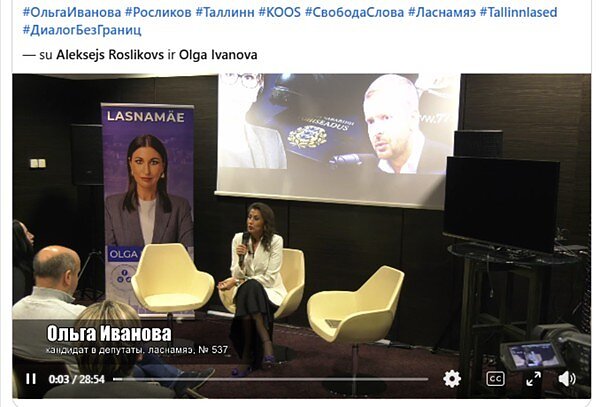
In October 2025, a conference on the rights of Russian speakers in the Baltic states was organised in Estonia.
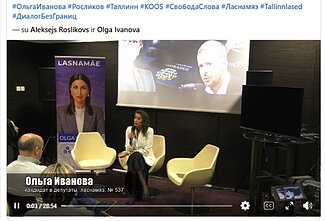
The event was arranged by Olga Ivanova, a local politician campaigning on behalf of Russian-speaking residents and a candidate in the Tallinn mayoral election.
Rosļikovs was due to attend, and Kandrotas travelled to Tallinn with him.
Estonian authorities informed the Lithuanian and Latvian citizens that they were temporarily unwelcome in the country before being turned back.
Kandrotas said he was therefore unable to meet Ivanova, despite travelling to participate in a special press conference.
On her social media accounts, Ivanova did not mention Kandrotas among the conference guests. She referred only to Rosļikovs and members of his party, arguing that the Estonian Interior Ministry’s decision to prohibit the event was “dangerously far from the fundamental values of democracy”.
A similar event focusing on Russian speakers’ rights was organised by Rosļikovs in Latvia last December, with Kandrotas and Ivanova invited to attend. However, the gathering effectively ended at the Lithuanian-Latvian border.
In a video posted on social media by Rosļikovs, he and Kandrotas embrace at the border and announce that Ivanova had not been allowed to enter Latvia.
Ivanova later confirmed that she had been denied entry and that the ban would remain in force for six months.
Neither Ivanova nor Rosļikovs has responded to journalists’ questions.
Kandrotas said he was surprised that Rosļikovs also left for Belarus, claiming the Latvian departed about a month earlier.
He said there were many ethnic Russians from Latvia now living in Belarus.
Asked why his statements so closely resembled those of Rosļikovs and why both repeated Kremlin propaganda narratives, Kandrotas said they simply shared the same views.

Newsletter
Every Friday morning.