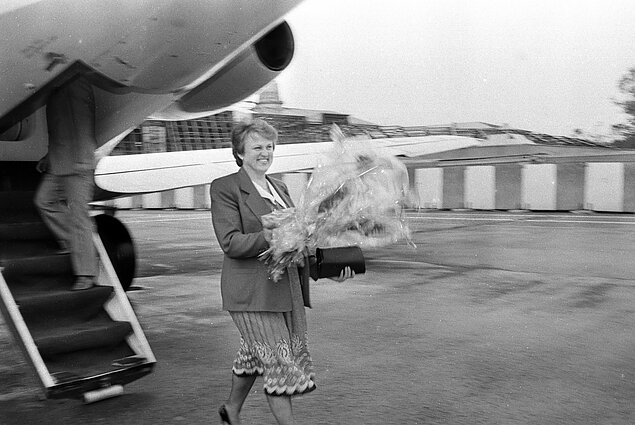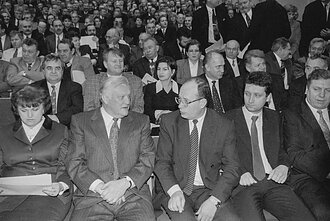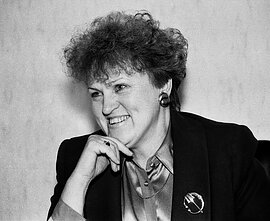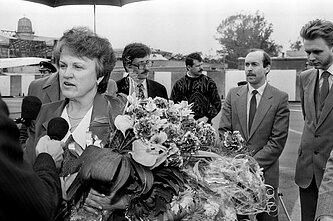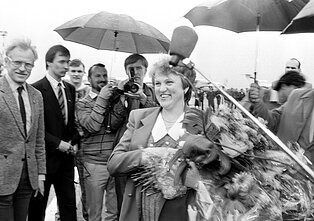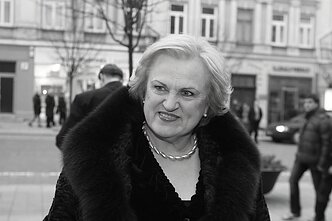


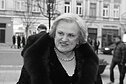





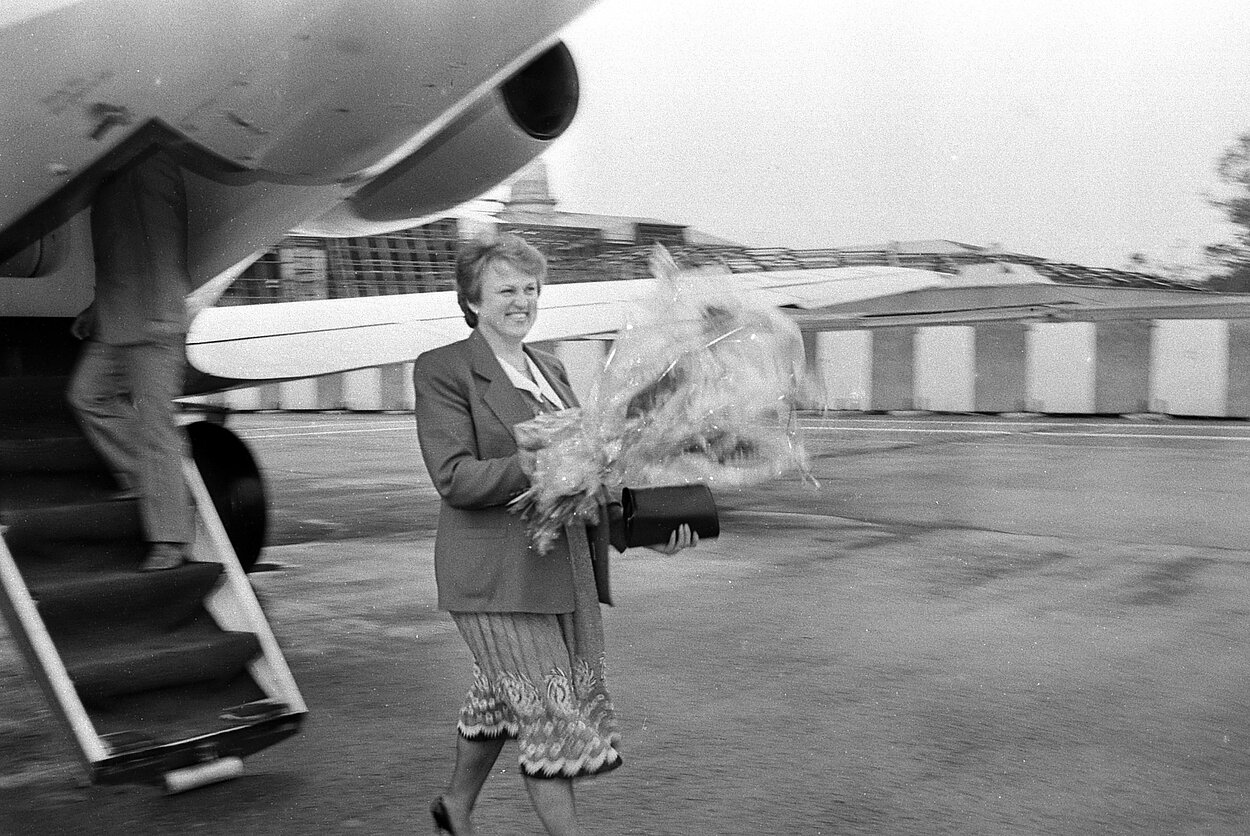
Lithuania lost on Thursday its first prime minister and a signatory of the Act of the Re-Establishment of the State, Kazimira Danutė Prunskienė.
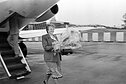
Colleagues recall the diplomatic tour that earned Prunskienė the nickname the Amber Lady, as well as the tears she shed in the days before the fatal events of January 13, 1991.
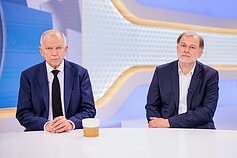
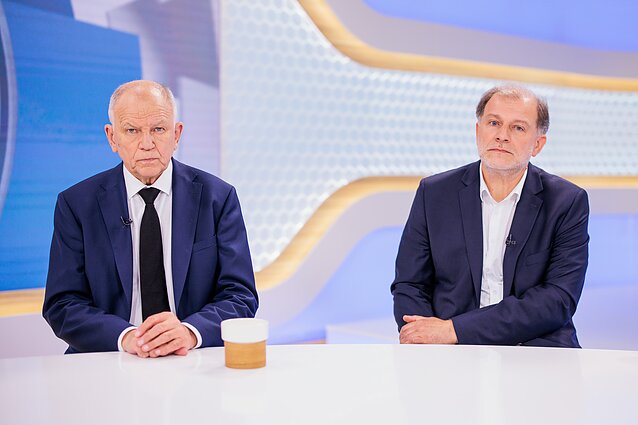
Former Culture and Education Minister Darius Kuolys, who served in Lithuania's first post-independence government, and independence signatory Vytenis Povilas Andriukaitis reflected on her legacy.
Further reading
Andriukaitis, looking back today, what mark did Prunskienė leave on Lithuanian history?
Andriukaitis: An enormous one. If we look at the past 130 years of Lithuanian history, she was probably the most outstanding woman of the country's period of social and spiritual revival.
Perhaps I could say that Gabrielė Petkevičaitė-Bitė was the defining figure of the first national revival, while Kazimira Prunskienė was the defining figure of the second.
Kuolys, the final 14 years of Prunskienė's life were very difficult after her stroke. Yet, according to her family, she continued to follow developments in Lithuania closely. You and other members of the first government visited her regularly. What do you remember?
Kuolys: She cared deeply about everything. She reacted passionately to events and, even after her stroke, would still sing together with members of the first government.
I would add something to what Vytenis has said. Kazimira Prunskienė had the task of forming the first government of the restored Republic of Lithuania – the government established after March 11, 1990.
It was a government led by a woman but made up entirely of men. There was not a single female minister. Looking back, it was probably Lithuania's most professional government – apart from me, the youngest and least experienced minister. The cabinet consisted of academics and professors, and the prime minister herself was a professor.
It also brought together people from different political backgrounds. There was Romualdas Ozolas, the deputy prime minister and one of the leaders of the Sąjūdis independence movement, while on the other side there was Algirdas Brazauskas, leader of the Communist Party. Kazimira Prunskienė succeeded in uniting Lithuania at that time.
Although she herself came from Sąjūdis [the Rebirth movement], she governed in an unmistakably democratic way.
What set Prunskienė apart was that she never tried to impose her own will. It was a cabinet of independent-minded people who listened to one another, debated, argued and searched together for solutions that would benefit Lithuania.
Those traditions of democratic government were established by Kazimira Prunskienė from the very first years of independence.
Kuolys, did Prunskienė ever explain why she chose you for her government? You have said you were the youngest and least experienced minister, yet you clearly gained her confidence.
Kuolys: Only later. It came as a great surprise to Prunskienė when the Sąjūdis leaders proposed me. It was unexpected for me, and it was unexpected for her too.
But once we started working together, one thing became very clear. Alongside those democratic traditions, Prunskienė was above all a woman of action, as well as a woman of intellect. She came from academia, but she was also practical and action-oriented.
The first government had to operate while Soviet troops were still stationed in Lithuania. It had no independent state budget and no national currency. Yet it was this government that had to lay the economic foundations of an independent state.
Prunskienė faced enormous uncertainty. No one knew when Russian tanks might roll in, yet Lithuania still had to be built day by day. She was a woman with remarkable determination, capable both of bringing a team together and of leading it herself.
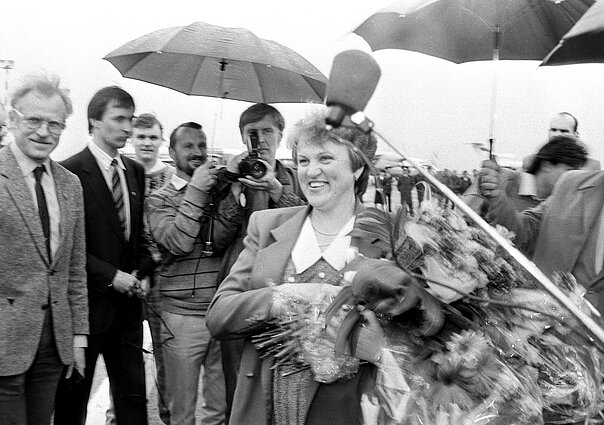
Andriukaitis, when people speak about Prunskienė, they always recall her landmark diplomatic tour of the West, during which she met US President George H W Bush, UK Prime Minister Margaret Thatcher, German Chancellor Helmut Kohl and French President François Mitterrand. It is often said that, after those meetings, Mikhail Gorbachev had little choice but to negotiate with Lithuania.
Andriukaitis: Absolutely. First of all, we must remember that from March 11, 1990, until the autumn of that year Lithuania had not yet been internationally recognised. It was very clear that, among the former Soviet republics, only Moldova recognised our independence immediately.
It was therefore crucial to understand how the capitals of the world's leading countries viewed Lithuania. Her visit was prepared exceptionally well.
And then there was her personal charm. Just imagine – newspapers across the world began calling her the Amber Lady.
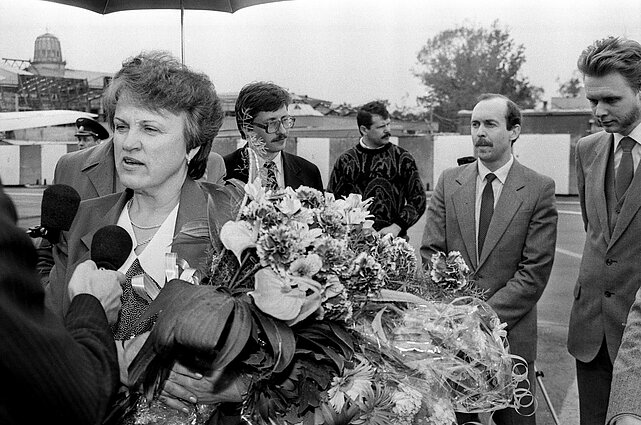
We still remember that this nickname came from the foreign press.
Andriukaitis: Exactly – from the foreign media. It was clearly intended as a counterpart to the Iron Lady. Margaret Thatcher was the Iron Lady, and then this woman from the Baltic states arrived and became the Amber Lady.
The word "lady" itself conveyed so much – her charm, her manners, her ease in communicating with people, her broad outlook and her exceptional communication skills.
She was nothing like the stereotypical rigid functionary of the Lithuanian or Soviet Communist Party. Her visit came as a genuine surprise, and that is why the international press embraced the name Amber Lady.
Kuolys, you have given several interviews today and said that you saw Prunskienė in tears. What made the prime minister cry?
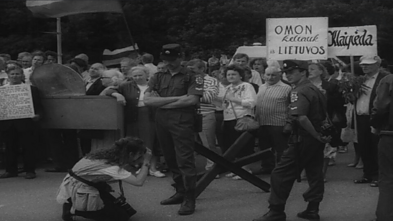
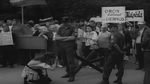
Kuolys: It was because of Lithuania. Kazimira Prunskienė was a sensitive person. At the time, we were still preparing for what we hoped would be another visit to Moscow, trying somehow to avert the coming blow. Before the events of January 13 [the Soviet crackdown], we could already see that Moscow was preparing for a decisive strike.
Further reading
Prunskienė returned from a meeting with Mikhail Gorbachev. We asked her to resign as prime minister, believing that doing so might help ease tensions.
We gathered in the cabinet room, and that was when we – the members of the first government – saw the prime minister in tears. She said: "It seems we have failed to achieve anything. We are doomed."
At that moment, the situation appeared hopeless. Gorbachev was unwilling to engage in any meaningful discussion. Then came January 13. The shock Prunskienė experienced was shared by all of us.
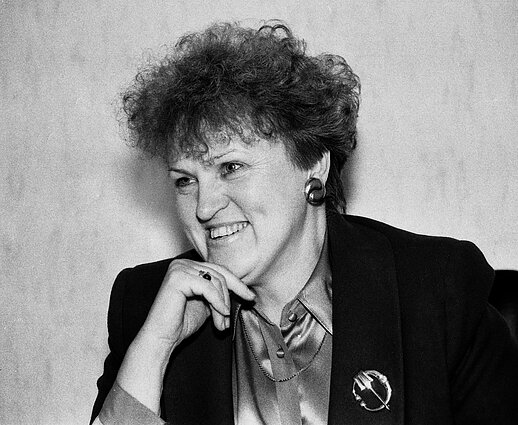
Andriukaitis, Prunskienė's political career continued afterwards. She served as agriculture minister for four years, and she came within a whisker of becoming president, losing to Valdas Adamkus in the second round of the 2004 election. She experienced many highs and lows in politics.
Andriukaitis: Absolutely. Her brightest period was from 1988 until her resignation in 1990. It was an extraordinary time. She was one of the defining figures of Lithuania's national revival.
Afterwards, of course, came the mudslinging – accusations relating to the so-called Šatrija affair and alleged KGB links.
It became a huge political mess, the sort of thing every revolution experiences when, as the saying goes, the revolution begins to devour its own children.
But it did not break her. She defended herself and, four years later, returned to politics. That was a remarkable testament to her character.
She then founded her own political movement instead of joining one of the larger parties. She established the Women's Party – the first party in Lithuania dedicated specifically to women. It reflected a distinctly European direction, because feminism was one of the defining features of Western Europe, and she chose that as the foundation of her new party.
Later, she also took part in coalition governments. Prunskienė and I both served in Algirdas Brazauskas' coalition. Afterwards, we also witnessed her political manoeuvres, including her decision to leave that coalition. There was everything [good and bad].
Andriukaitis, the last party she led was the Lithuanian People's Party (Liaudies Partija). At the time, she argued that Lithuania should pursue a more pro-Russian foreign policy. Many saw that as a stain on her legacy, particularly as she invited guests from Russia, Belarus and Kazakhstan.
Looking back today, does that diminish the achievements we have been discussing from the years before and immediately after independence?
Andriukaitis: No, it does not. Quite the opposite.
The reality is that developments in the former Soviet republics at that time were very different. Even Vladimir Putin's first years in power were different. If you look at his speeches after his inauguration, you will hear a very different tone from the one that emerged later.
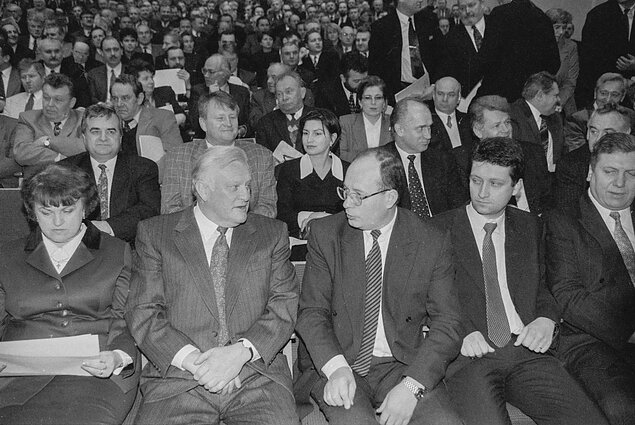
But we are talking about 2009.
Andriukaitis: Yes, but from 2009 to 2026 the world changed enormously. Back in 2009, Kazakhstan was a major market for Lithuanian business. Russia was a major market. Belarus was also an important market.
Then another decade passed, from 2009 to 2019. Those who enjoy attaching labels can continue doing so. Prunskienė was, above all, a very pragmatic politician.
Kuolys: I believe that today we should simply bow our heads in respect for Lithuania's first prime minister.
She was the first prime minister appointed after the declaration of independence on March 11. She was the first prominent woman to lead the Lithuanian government. As Vytenis said, the years from 1988 to 1990 were truly her finest hour.
We should honour those who built our state. Yes, mistakes were made – none of us is perfect. But despite those imperfections and setbacks, we must recognise the people who made the greatest contribution and the achievements they accomplished.
Prunskienė undoubtedly rendered great service to the Lithuanian state.
That is what we should remember today. We should remain grateful for her contribution and honour both her memory and the work she carried out for Lithuania.
Let us finish on a lighter note. One of Prunskienė's quotes has always stayed with me. During her presidential campaign, she said: "I would be a tank in a skirt." That seems to capture her character – her energy, determination and willingness to engage with people.
Andriukaitis: It reflects even more than that. Think of how many women aspired to be like her. In many places, people would point to an active woman and say: "There's our Prunskienė."
Yes, energetic women even began to be called "Prunskienės".
Andriukaitis: I can personally testify to that. In many communities, people would simply say: "She's our Prunskienė."
Kuolys: At the time, Professor Vanda Zaborskaitė said: "Thank God there was Prunskienė. She showed generations of girls that they were not destined only for housework – they could also lead a country."
And that is exactly the example Prunskienė set in 1990.

Newsletter
Every Friday morning.