



That day, the world's attention was focused on Moscow. On July 30–31, 1991, some 3,000 journalists gathered there to witness one of the defining moments marking the end of the Cold War – the signing of a landmark arms-reduction treaty between the United States and the Soviet Union.
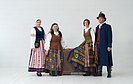
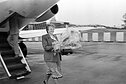
At the same time, Lithuania was hosting the Fourth World Lithuanian Games, bringing together more than 6,000 Lithuanians from across the globe. The celebration reunited members of the Lithuanian diaspora with their homeland after decades of separation. Among the participants was future Lithuanian President Valdas Adamkus.
Few could have imagined that Adamkus would instead be asked to react to images from Medininkai.
"It is horrifying. There are no words in the civilised world to express the feelings, the tragedy that took place this morning," he said.
The fatal shots fired on the morning of July 31 killed Vilnius Customs inspectors Antanas Musteikis, Stanislovas Orlavičius and Ričardas Rabavičius, Road Police officers Algirdas Kazlauskas and Juozas Janonis, and members of the ARAS special police response unit, Mindaugas Balavakas and Algimantas Juozakas, who were on duty at the Medininkai border post.
The only survivor, customs officer Tomas Šernas, later became a key witness in the Medininkai case.
LRT.lt reconstructs the events leading up to and following the Medininkai massacre in July and August 1991, based on material from the LRT archives and the newspapers Vakarinės Naujienos, Respublika, Tiesa and Lietuvos Rytas.
Lithuania's second summer
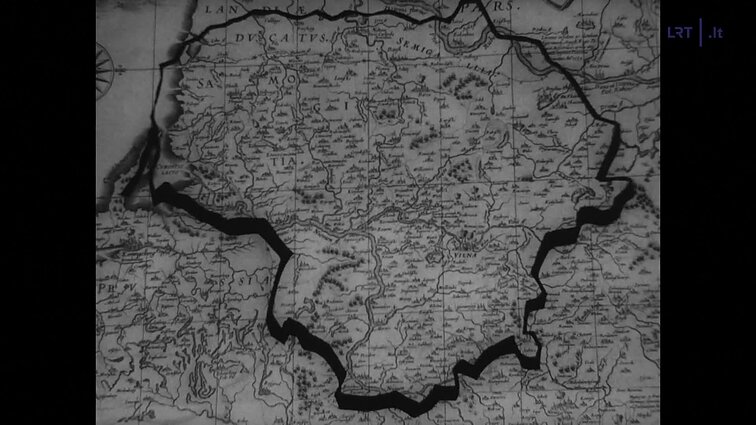
The euphoria that followed Lithuania's declaration of independence in March 1990 had, by the summer of 1991, given way to economic hardship, pressure from Moscow, and a campaign of intimidation against the country and its officials.
Soviet forces still occupied the Radio and Television Committee buildings – the present-day LRT – and the Press Palace, seized during the January crackdown, while newspapers increasingly questioned the country's chosen path.
"Where have we ended up?" asked a reader identified only as A. V. from Šiauliai in a letter to the press. "People hoped for a better life, believed in Sąjūdis [the Rebirth movement] and the deputies it put forward, but so much has been turned upside down."
Letters expressing similar frustration appeared almost daily.
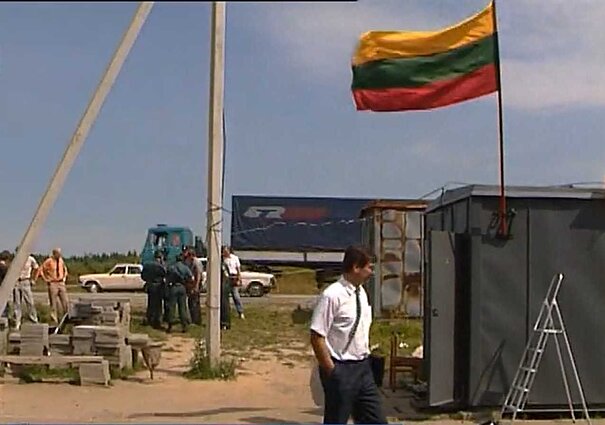
Attacks were not confined to the border. On one June evening, Soviet troops occupied Vilnius's long-distance telephone exchange for several hours. Such incidents had become part of everyday life.
The day before the Medininkai killings, newspapers carried what appeared to be just another routine report from that turbulent period:
"On the night of July 28, according to ELTA, five unidentified men in civilian clothes armed with automatic weapons attacked the Saločiai border checkpoint. They forced border guards to lie on the ground, took their belts, money and three portable radios, then set fire to the checkpoint building before driving towards Latvia."
By July 1991, Lithuania's independence had been recognised only by Iceland, Denmark, Moldova and Slovenia, itself fighting for independence from Yugoslavia. Most Western governments still regarded developments in Lithuania as an internal Soviet matter.
Despite its precarious position, Lithuania continued taking practical steps towards full independence. Temporary vouchers, known as Talonai, were due to enter circulation on August 5, beginning the difficult process of separating the country's economy from the Soviet rouble. Newspapers also celebrated the introduction of Lithuanian-designed police uniforms.
Yeltsin and Landsbergis, Bush and Gorbachev
Although the Soviet Union was being torn apart by internal political struggles, few realised it was living through its final summer. Only three weeks remained before the failed August coup, and less than five months before the Soviet Union collapsed. While Mikhail Gorbachev remained highly popular in the West, his support at home had steadily eroded.
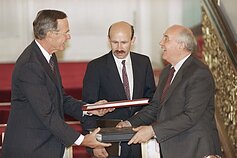
At the end of July, international attention shifted from the war in Yugoslavia back to Moscow, where preparations were underway for a summit between Gorbachev and US President George H W Bush. The two leaders were due to sign the Strategic Arms Reduction Treaty (START I), a landmark agreement widely seen as another milestone marking the end of the Cold War.
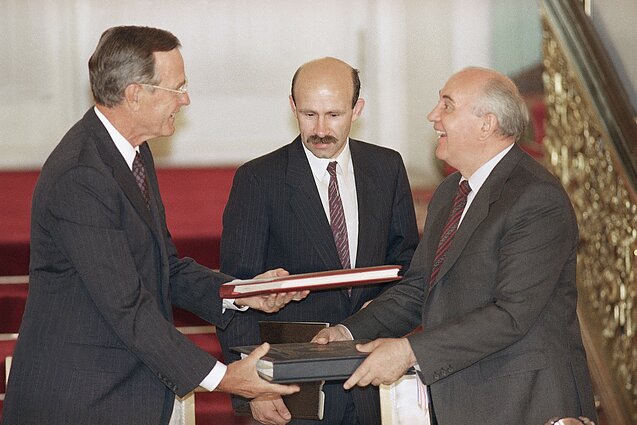
More than 3,000 journalists travelled to Moscow to cover the summit. Yet the Bush administration's approach to the Baltic states, and its reluctance to press their case, reflected continued support for Gorbachev despite his weakening domestic position. Backing from Washington remained crucial for the Soviet leader.
Although Lithuania was not represented at the talks, its parliamentary leader, Vytautas Landsbergis, told reporters that "Lithuania will also be discussed" during the meetings. The events at Medininkai would fulfil that prediction.
Even before the high-profile summit, another historic development had dealt a significant blow to the Soviet establishment.
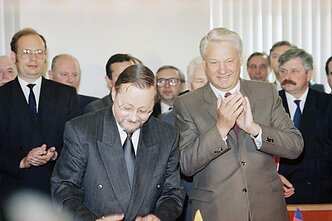
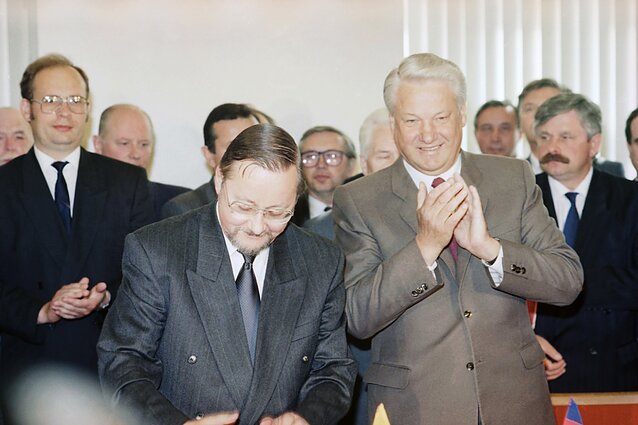
On July 29, Landsbergis and Boris Yeltsin, then president of the Russian Soviet Federative Socialist Republic (RSFSR), signed a treaty in Moscow recognising each other as sovereign states. Russia also acknowledged the continuity of the Lithuanian state.
The RSFSR became the fifth state to grant de facto recognition to Lithuania's independence. The timing of the agreement somewhat overshadowed what had been expected to dominate the international agenda: the Bush-Gorbachev summit, which was due to begin the following day.
A few days later, a Vakarinės Naujienos correspondent reflected on the possible motives behind the Medininkai killings:
"What was it? Revenge for the treaty signed between the Republic of Lithuania and the Russian Federation? A deliberate attempt to undermine the Bush-Gorbachev talks in Moscow? Simple vandalism? Or just another OMON attack on Lithuania's customs posts?"
04:45
On July 31, Lithuanian newspapers carried the full text of the treaty signed between Lithuania and the Russian Soviet Federative Socialist Republic (RSFSR), reports on the meeting between US President George H W Bush and Soviet leader Mikhail Gorbachev, and coverage of the World Lithuanian Games.
All of those stories, however, were eclipsed by news from the Medininkai border checkpoint.
“A sad and symbolic detail – on the wrist of one of the victims was a watch that had stopped at 04:45. Perhaps from the blow, perhaps from a ricocheting bullet,” a news report read.
The detail later became an important part of the complex murder investigation. Contemporary newspaper reports said that truck drivers travelling from Yaroslavl, after finding no officials on duty at the Medininkai checkpoint, entered the guard hut and discovered the shot officers.
At around 06:00, they informed staff at a nearby petrol station.
That same night, an explosion also rocked the Antakalnis district of Vilnius near a building used by a Soviet-loyal security force. It was later suggested that the blast may have been a provocation designed to divert attention.
“As is known, at 02:48 that same morning, an explosion occurred outside No. 1 Sapiega Street in Vilnius. The blast shattered the windows of the four-storey building housing the headquarters of a military unit of the USSR Interior Ministry,” newspapers reported.
Six bodies were found at the Medininkai checkpoint. A seventh officer, Ričardas Rabavičius, died from his injuries on August 2. Only customs officer Tomas Šernas survived.
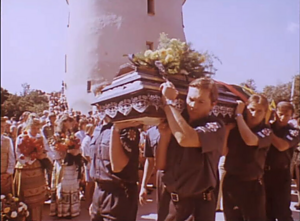
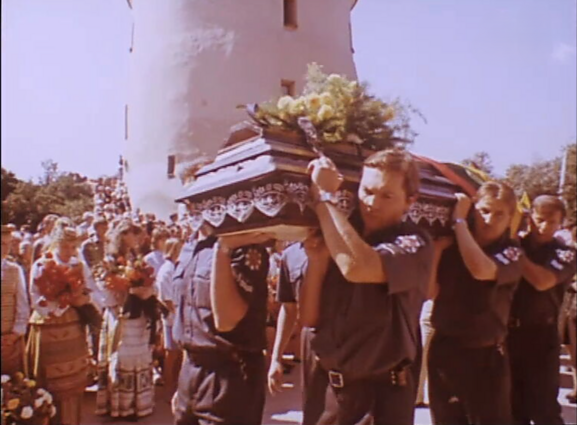
Lithuania declared a national day of mourning, and an extraordinary session of the Supreme Council was convened. The tragedy also halted the World Lithuanian Games. The victims were buried on August 3.
The Medininkai massacre became the deadliest attack in a year marked by repeated assaults on Lithuania's newly established border checkpoints.
Newspapers frequently referred to the perpetrators as the “blacks” – a nickname used for the Soviet OMON special police units loyal to the USSR Interior Ministry that wore black uniforms. They were blamed for the campaign of terror.
Delayed international response and pro-OMON rally
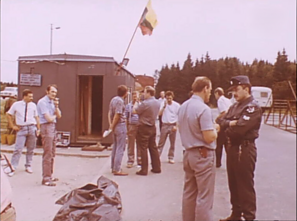
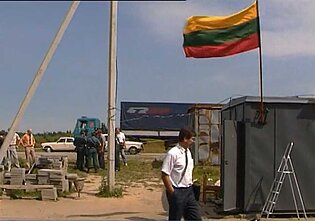
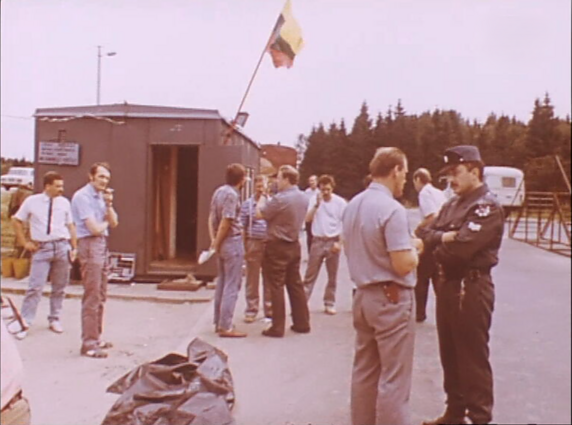
“On August 1, the road to Minsk looked as it always did – cars, lorries, goods and buses. Only at Medininkai did there remain the lingering sense of recent death.
“Three customs officers stood beside the guard hut, their belongings scattered on the grass. They did not want to speak to anyone, silently nodding to passing drivers offering their condolences,” Lietuvos Rytas correspondent Valdas Valiukevičius wrote.
The investigation quickly encountered another obstacle. Investigators sent from central Soviet authorities carried out actions that complicated the inquiry. From the outset, however, blame was directed at OMON and its commandos.
“We know very well that behind every Soviet armed force and every gang maintained by them stands the highest leadership of the Soviet Union,” Vytautas Landsbergis said in a televised address to the nation.
“Some even try to suggest there is some conflict between Lithuania and Belarus. There is nothing between Lithuania and Belarus, or Lithuania and Russia. This is a struggle for freedom against the forces of an inhuman empire built on inhuman foundations. The instruments of that empire in Lithuania must be removed,” Landsbergis said.
Although the killings shocked the international community and footage from the scene was broadcast around the world, the reaction of President Bush, who was in Moscow at the time, was cautious. He continued to express support for Gorbachev and stopped short of linking the massacre to the Soviet leadership.
Lithuania received an official letter of condolence from the US president only two weeks later.
“As I have noted before, a situation has developed in the Baltic states that threatens the use of force, and this must be corrected. We will continue to insist that the Soviet government control the actions of its military forces in the Baltic states, and we will make it clear that Moscow itself bears direct responsibility for the actions of its officials,” the letter said.
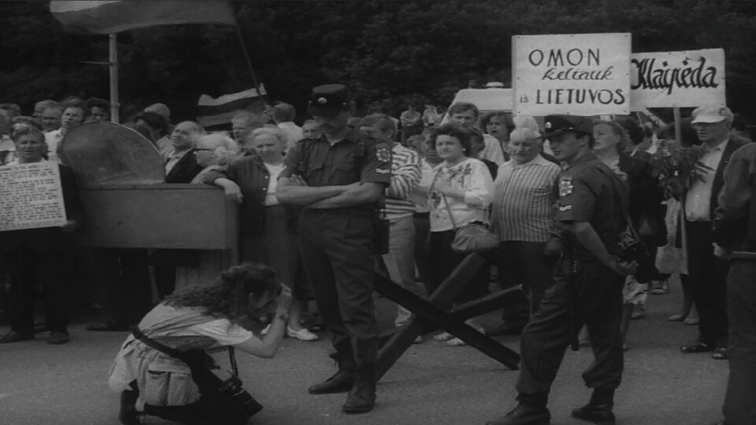
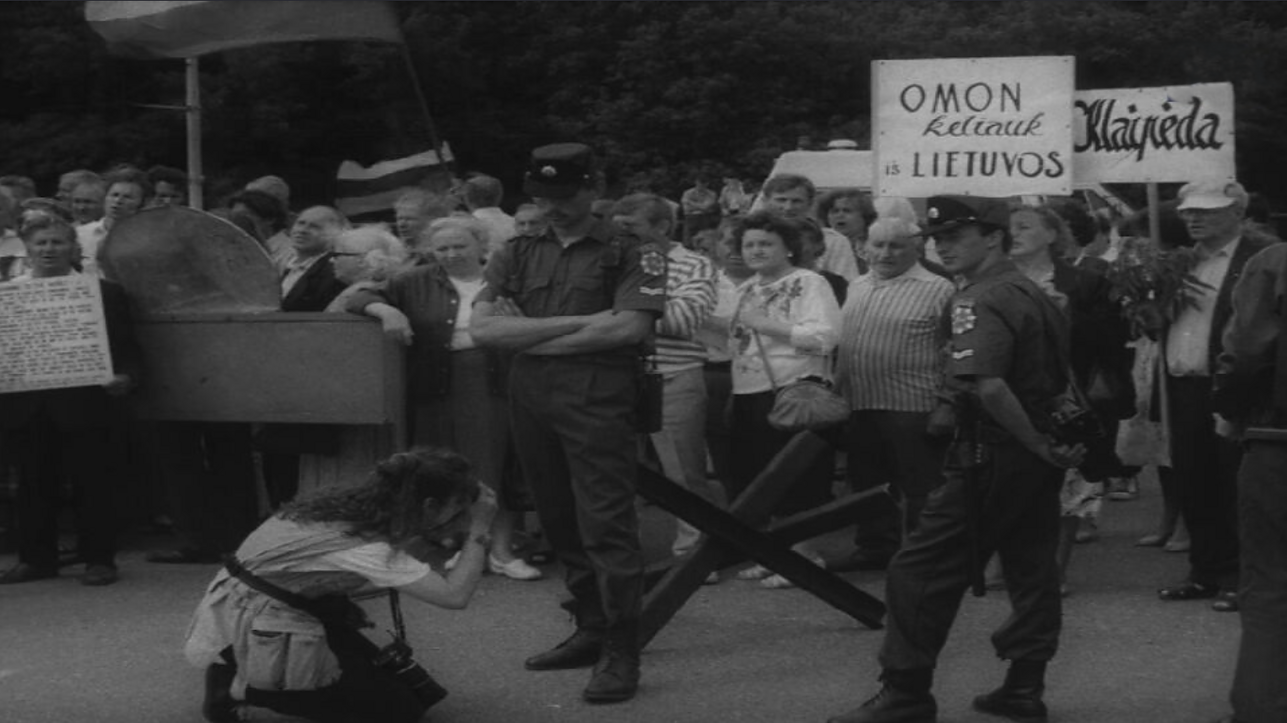
Following the funerals, Lithuania prepared for a prolonged protest outside the OMON base in Valakampiai and the KGB headquarters in Lukiškės Square. The Sąjūdis independence movement called on people to join a multi-day demonstration under the slogan: “OMON Out!”
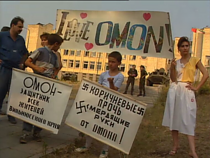
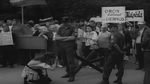
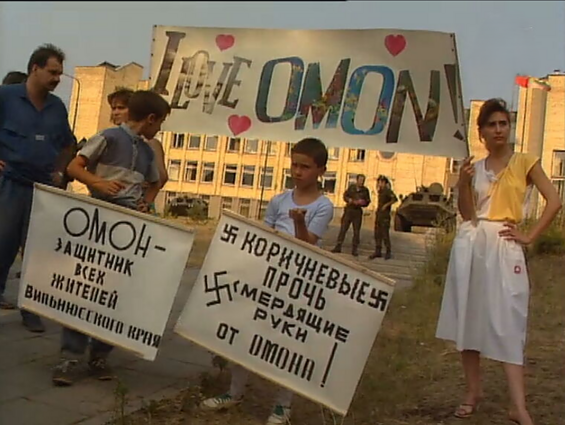
The day before the protest began, a small group of opponents of Lithuanian independence staged a rally in support of OMON. Carrying placards reading “I Love OMON” and “OMON – You Are Our Defenders”, participants laid flowers and expressed support for the officers accused of carrying out the Medininkai killings.
At that point, only two weeks remained before the failed Soviet coup.
After the massacre, there were widespread fears of further provocations. Some speculated that attackers might disguise themselves in stolen Lithuanian uniforms and launch attacks on Russian military units in an attempt to inflame tensions.
The Medininkai massacre became one of the final violent acts of the dying Soviet Union.
Less than a month later, on August 19–21, 1991, hardline Soviet officials attempted to overthrow Gorbachev and seize power in the failed August coup.
One of the coup's organisers was Soviet Interior Minister Boris Pugo, whose ministry controlled the OMON units. After the coup collapsed, the Soviet Union entered its final stage of disintegration.
Although numerous theories about the Medininkai massacre appeared in the press at the time, the investigation dragged on for years. A final court verdict was delivered only in 2017.
Four men were convicted over the murders. Lithuanian courts sentenced Andrey Laktionov, Cheslav Mlynik and Aleksandr Ryzhov to life imprisonment in absentia after Russia refused to extradite them.
The only person serving a life sentence is Konstantin Mikhailov, who was arrested in Latvia in 2006.

Newsletter
Every Friday morning.