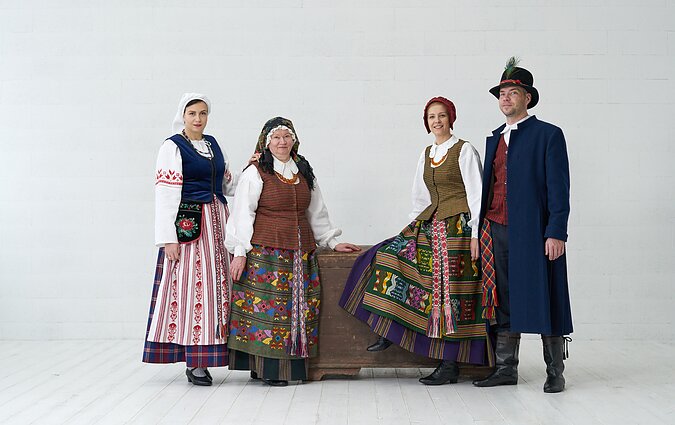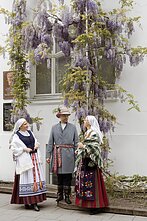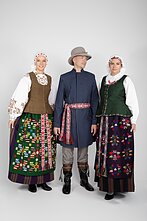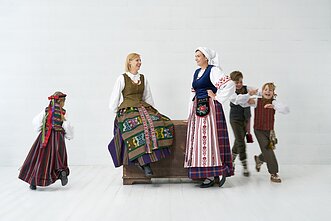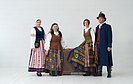















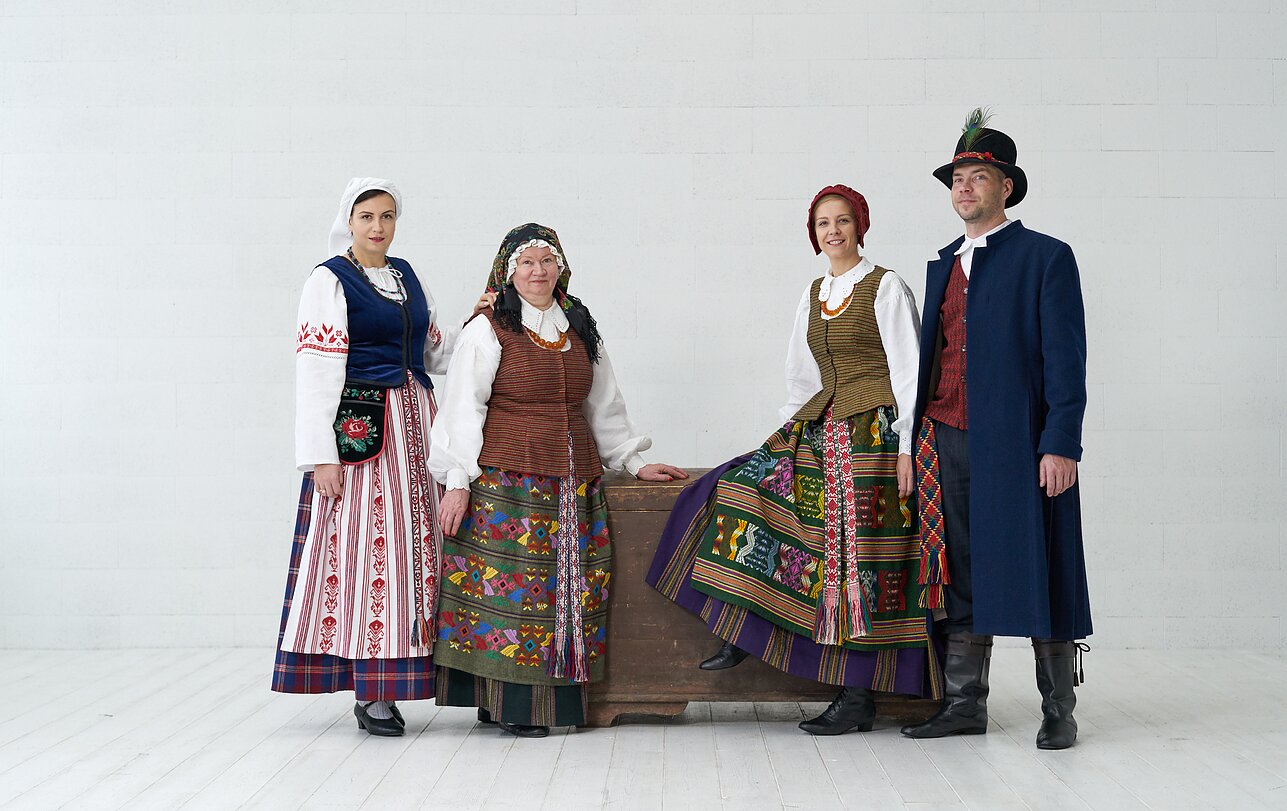
Mindaugas and Ilona Tamošaičiai run an unusual business: their company, Rūta Žalioji, recreates traditional Lithuanian costumes worn in the 19th and 20th centuries. Their costumes are also finding buyers across the world, including customers in countries like Nigeria and Japan.
A traditional Lithuanian costume consists of five main parts: a shirt, waistcoat, apron, skirt and sash. The accessories can include different types of headwear, jewellery, petticoats, wrist warmers and shawls.
“Authenticity is very important to us. We travel to museums, take measurements and examine the details. It would be difficult to recreate a costume from photographs alone because you cannot see the proportions,” says Ilona Tamošaitienė.
The couple follow strict regional traditions. A skirt from the Žemaitija region, for example, cannot simply be paired with a shirt from the Dzūkija region.
“It is important to us to follow the requirements of our national heritage. We make them as they were made at the time,” says Mindaugas Tamošaitis.
The Tamošaičiai also want to dispel the myth that traditional Lithuanian clothing was mostly grey and brown. By the 19th and 20th centuries, chemical dyes were already widely used, allowing for a much wider range of colours.
While more practical, earthy shades were common for everyday clothes, people also liked to dress up for church, weddings and other special occasions.
“People see clothes in museums and imagine they were only greyish or brown. But the colours have faded over the centuries. If you can look inside a garment and fold back the edge, you can see what the original colour really was. Nobody expected aprons to have been pink,” Mindaugas says.
Ilona says it can also be surprising to discover what people once wore by looking at the wardrobes of wealthier ancestors: clothes could be made from imported fabrics such as velvet, jacquard and damask.
“People have always wanted to dress up,” she says. “They simply did so according to their means.”
Priests also played an important role in setting the boundaries of acceptable dress and behaviour. For example, it was considered improper for a woman to leave the house without an apron, while only unmarried women were generally allowed to go out with their hair uncovered. Married women were expected to cover their heads.
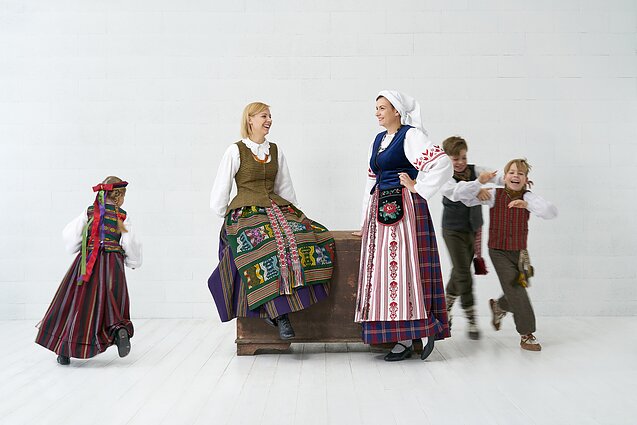
Six months to embroider one apron
A traditional costume was often expected to last a lifetime, so making one takes time.
Ilona says hand-embroidering an exceptional Dzūkian apron can take about six months. Simpler garments can be made more quickly, particularly with modern tools.
About 15 people may work on a single costume, with different craftspeople specialising in different parts. One seamstress may make waistcoats, another skirts, and so on.
The waistcoat is one of the most technically demanding parts of a woman's costume. It also served a function similar to that of a bra, meaning it had to be shaped precisely to fit the wearer's body.
For Mindaugas, finding skilled workers and suitable fabrics is one of the biggest challenges.
“There was a time when Lithuania had a factory where you could order as much fabric as you needed. It wove fabrics for everyone. That factory no longer exists – it went bankrupt, and no one else has taken its place,” he says.
“Now we have to order large quantities from factories. It is difficult to find people who want to weave, embroider, make shoes or produce headwear. These days, finding any kind of craftsperson is very difficult. We are trying to train and develop craftspeople ourselves,” Mindaugas adds.
Although skilled weavers and seamstresses who understand the finer details of traditional costumes are becoming increasingly rare, Mindaugas does not believe the costumes themselves will disappear.
He says they are worn for a wide range of occasions, from childhood through to death. Customers order them for weddings, anniversaries and official events, and sometimes even as burial clothes.
“We often make costumes for graduation ceremonies. It is also very gratifying when the parents of newlyweds give traditional costumes to the couple as a wedding gift,” he says.
Lithuania's Song Festivals are the Tamošaičiai's busiest time of year. But Ilona says the rewards are not only financial.
“You sit at the Song Festival and see a hall full of people dancing in costumes you made. It is incredibly rewarding,” she says.
Mindaugas is not surprised that interest in traditional costumes is growing.
“That is how it should be. It is a sign of a society's maturity, culture and growth,” he says.
The couple's customers now come from around the world – from a school in Nigeria to Japan.
“It is not only Lithuanians who buy them. We have made parts of traditional costumes for more than one foreigner with no connection to Lithuania. Japanese people, for example, like them. They buy sermėgos, waistcoats, shirts and wrist warmers,” Ilona says.

Newsletter
Every Friday morning.