















Lithuania's parliament, the Seimas, voted on Thursday to take forward a package of amendments to the Criminal Code aimed at reducing sexual harassment and violence and improving support for victims.
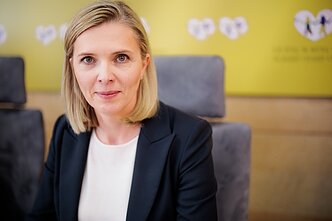
"I am presenting a legislative package through which we seek to strengthen the protection of men, women and children who have experienced sexual violence," said Agnė Bilotaitė, a conservative MP who chaired the working group that drafted the amendments.
She argued that the current legal framework fails to address existing problems or adequately protect human rights, and noted that more than 44,000 signatures calling for legislative change were handed to the Seimas at the end of April.
A single offence, consent at its core
The amendments propose merging two separate Criminal Code articles – currently defining rape and sexual assault as distinct offences – into a single article under the name "sexual assault", covering all forms of sexual activity.
The proposed new wording would read: "Anyone who engages in vaginal, anal, oral or other physical sexual contact with a person without their voluntary consent shall be punished by imprisonment of between one and five years."
"We are proposing to enshrine a consent-based model of sexual offences. This means that sexual activity without the consent of one of the parties constitutes a criminal offence," Bilotaitė explained.
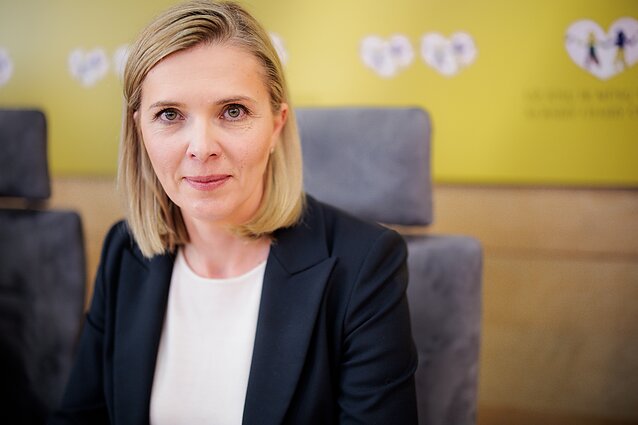
She was keen to dispel concerns about the practical implications. "There will be no requirement for written consent, we are not changing the presumption of innocence, and we are not shifting the burden of proof to the accused," she stressed.
However, Vytautas Sinica, a member of the mixed parliamentary group, said he would not support the bill, citing uncertainty about how the presence or absence of consent would be established in court.
Under the proposed changes, the absence of voluntary consent would become the central element of the offence, with the burden of proving that consent was given falling on the defendant.
A similar amendment was previously proposed in the last parliamentary term by Morgana Danielė of the Freedom faction, which would have required clear and voluntary consent to be expressed before sexual activity.
Further provisions
The package of amendments also proposes that physical force, threats of force, removal of the ability to resist, and exploitation of a victim's helpless state become aggravating factors rather than standalone elements of the offence.
Equal criminal liability is sought regardless of the form of sexual violence used. The amendments would also extend the scope of workplace sexual harassment legislation to cover harassment by colleagues – at present, sanctions apply only to managers or others in a position of authority over the victim.
"We have a situation in which there is no applicable liability for harassment. We propose that a single incident carry administrative liability, while systematic conduct could give rise to criminal liability," Bilotaitė said.
The package also seeks to tighten the law on grooming of persons under the age of sixteen, establishing that liability arises from the act of grooming itself – without requiring the perpetrator to have taken further steps towards arranging a meeting.
In addition, the amendments would extend the statute of limitations for sexual offences against children. Where a person experienced sexual violence as a minor, the limitation period would not expire before they reach the age of 30– up from the current threshold of 25.
Parliamentary vote and wider context
The amendments passed their first reading with 55 votes in favour, 4 against, and 13 abstentions.
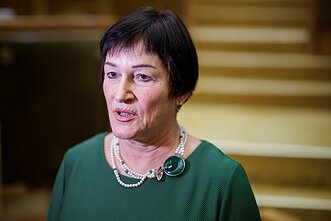
"Yes means yes – that is the message this package against sexual violence sends to society," said Birutė Vėsaitė, a Social Democrat MP.

The amendments were drafted by a cross-party working group established last year, with representatives from all parliamentary factions.
Bilotaitė cited figures suggesting that one in four women in Lithuania reports having experienced physical or sexual violence, yet on average eight out of ten victims do not seek help at all.
Data from Prabilk (Speak Out), a sexual violence information centre, show that 176 contacts were registered last year – 125 by telephone, 32 by email, and 19 via a messaging application. This represents a significant increase on 2024, when 56 contacts were recorded, and 2023, when there were 22.

Newsletter
Every Friday morning.