



Former US President Barack Obama travelled to Estonia in 2014 because he feared Russia could attempt a Crimea scenario there. Ben Rhodes, the president’s adviser at the time, remembers that the US was prepared to go to war for the Baltics. Now, he’s not so sure.
In 2014, Russia ignited a war that, over more than a decade, escalated into the gravest continental security crisis since the Second World War – one that eventually sent residents of Lithuania, a NATO state, into shelters.
The United States did not stop the conflict from spreading in Ukraine in 2014, but the White House sought to ensure it did not extend into the Baltic states.
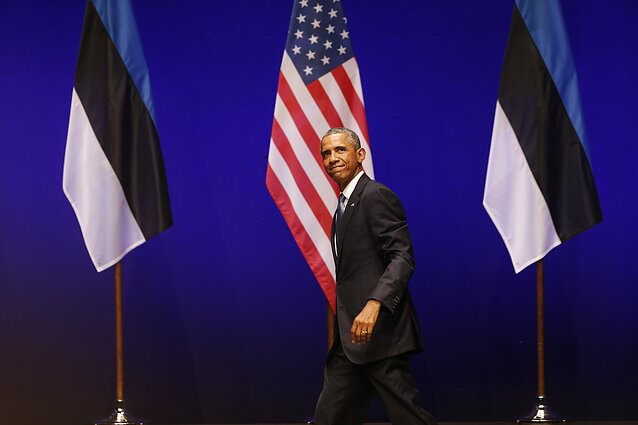
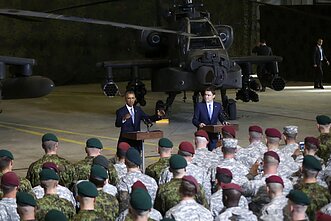
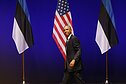
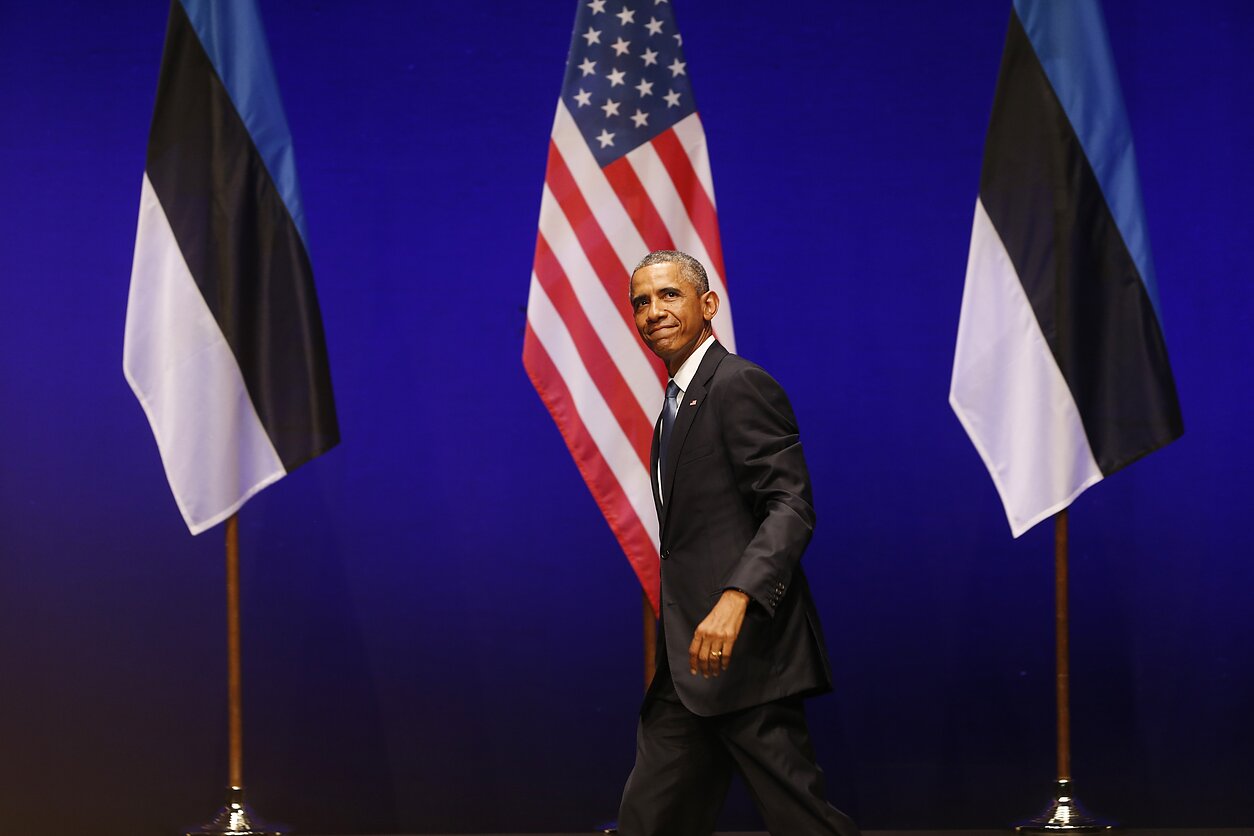
In September that year, then US President Barack Obama travelled to Estonia. In a speech in Tallinn, he quoted an Estonian poet asking, “Who will come to help?”, before answering:
“I say to the people of Estonia and the people of the Baltics, today we are bound by our treaty Alliance. We have a solemn duty to each other. Article 5 is crystal clear: An attack on one is an attack on all. So if, in such a moment, you ever ask again, ‘who will come to help,’ you’ll know the answer -- the NATO alliance, including the armed forces of the United States of America.”
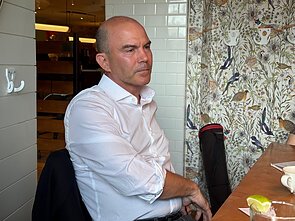
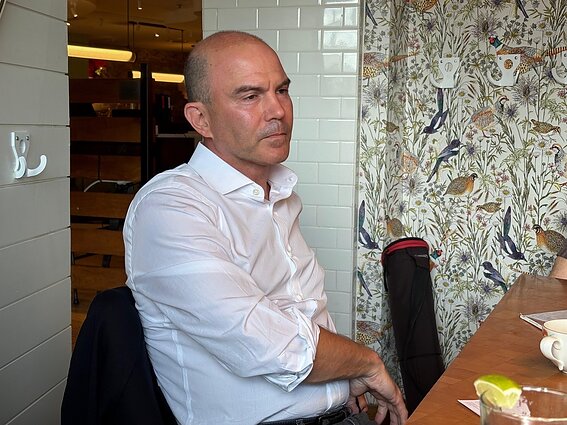
Obama’s longtime adviser and speechwriter Ben Rhodes remembers the 2014 visit vividly. We met in a restaurant in Washington.
I ask why Obama decided to travel to Estonia at the time. Did the White House see signs that Russia might directly challenge NATO?
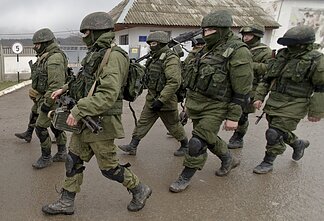
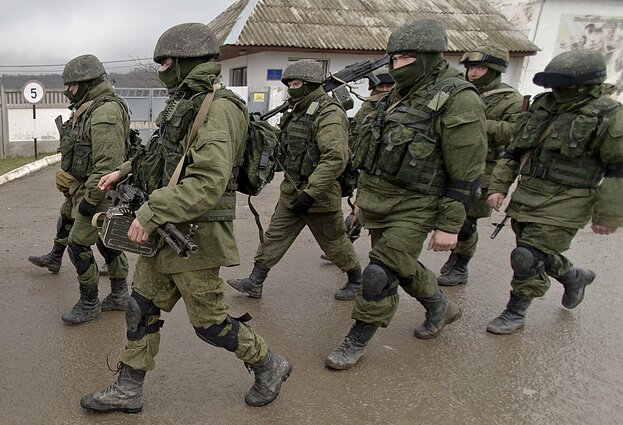
“Yes, we did. We were worried they were going to do a little green men play in the Baltic states,” the former adviser says.
The signals, he says, were not intelligence-based but analytical, “and the Baltic states warned us that they were going to do it”.
Rhodes insists that Obama was prepared to fight for the Baltic states. “We would have sent troops. That was the message of the speech,” he says.
When asked whether there is now a doubt about that commitment, he replies: “I do think it’s a question.”
According to Rhodes, the purpose of Obama’s visit and speech in Tallinn was to make clear to Russia that there was a line it could not cross: “If Putin crosses it, we go to war.”
“Ukraine was not that line,” he acknowledges.
Obama’s red line was NATO borders. He would have fought for NATO allies in the Baltic states, but not for Ukraine, which remained outside the alliance. Putin took advantage of that, Rhodes admits.
To this day, criticism of Obama’s Tallinn speech is overshadowed by accusations that he failed to deter Russia from escalating the war in Ukraine.
White House caught off guard by Crimea
“I remember being called into the Situation Room,” Rhodes says when asked about the White House response to the annexation of Crimea.
He and the rest of President Obama’s team gathered in the crisis meeting room in the basement of the White House after Russian troops had already seized institutions in Crimea and raised Russian flags.
The president’s team was confronted with facts already on the ground.
“The briefing is: the Russians had taken Crimea; it’s happened. It wasn’t like it was beginning to happen. We did not have an advanced warning,” Rhodes recalls.
He admits it was both an intelligence and a political failure. “Nobody predicted it. We just had this laborious negotiation that included the Russians, which ended with Yanukovych leaving.”
Rhodes says he has Ukrainian friends who have also asked him why the US failed to stop what happened in Crimea.
“Literally, we couldn’t. It had already happened,” he says.
That left one central question: how to respond to Russia’s illegal territorial expansion. Obama was presented with several options.
“None of them were military. Nobody was suggesting we should militarily go in and try to dislodge Russians from Crimea,” Rhodes recalls.
The sanctions imposed by Obama over Crimea were criticised in Eastern Europe as too weak and largely symbolic.
“This may sound offensive – and I’m not here to defend all of our policies – but at the time, they did not feel symbolic,” he says.
“We were dragging Europe to do bigger sanctions,” Rhodes recalls. “The French did not want sanctions. The Germans – Merkel did, but she had the Nord Stream project.”
According to Rhodes, only Poland, the Baltic states and the British were pushing for tougher sanctions at the time.
“We were ahead of Europe when it came to the sanctions. Not eastern, but Western and Southern Europe,” he says.
“Virtually every new sanctions package during the Obama years followed the same pattern: the UK, the US and Eastern Europe wanted to do next-level sanctions, but then we had to get Merkel on board, then the French, then twist the arms of southern Europe,” the former adviser recalls.
Rhodes says, however, that “intellectual honesty” requires acknowledging that the West had no leverage capable of forcing Russia out of Crimea. No sanctions, he argues, would have achieved that.
“If I were Ukrainian, I would not want to hear that. But Putin’s whole political identity became about Crimea. And if you know Putin, why would he surrender because he’s getting sanctioned? He has lost hundreds of thousands of men and hundreds of billions of dollars, and he has not pulled out of Eastern Ukraine.”
Rhodes also disagrees with Obama’s later decision not to send Ukraine the weapons it had requested after Russia and its armed separatist proxies launched the war in Donbas.
“Obama’s argument was twofold: number one, if we start putting weapons in, maybe Putin moves on Kyiv. Not to get into intelligence, but there were indications that this was possible,” Rhodes says.
“And two, the Ukrainian military needed a level of professionalisation,” he adds.

Newsletter
Every Friday morning.