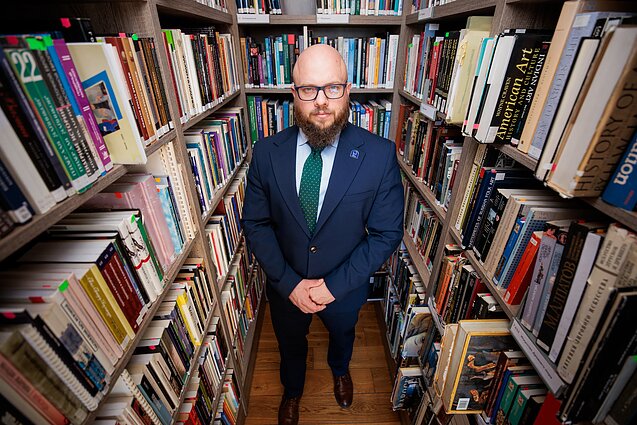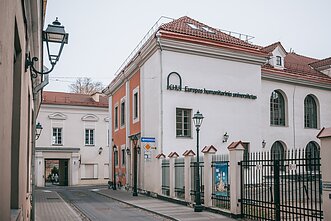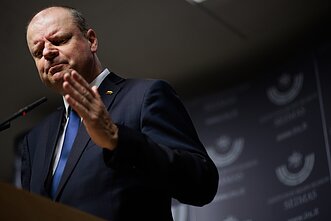








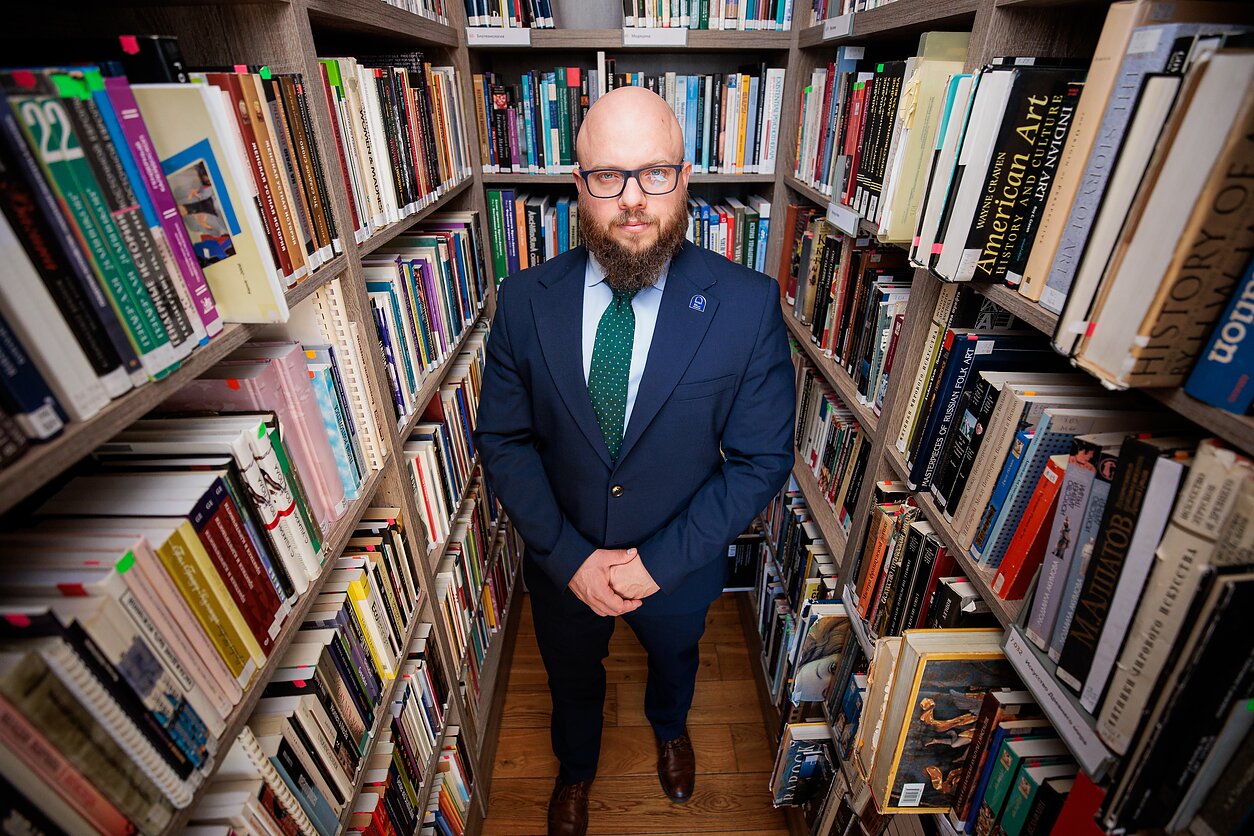
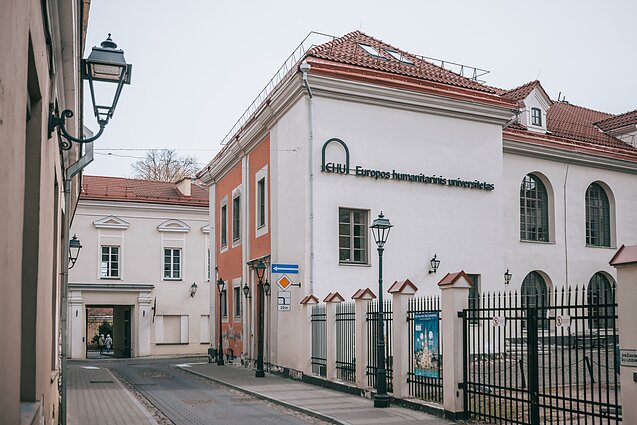
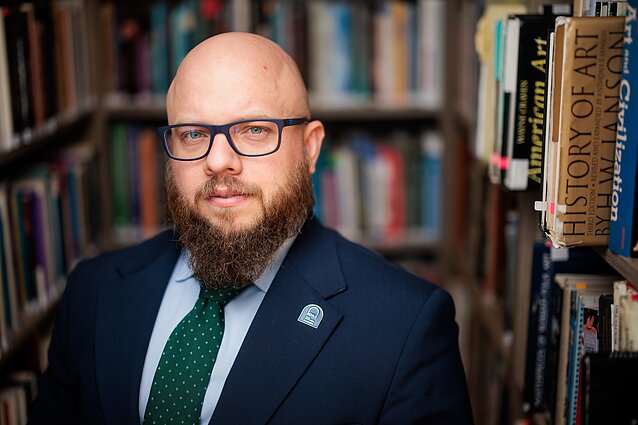
Belarusian authorities have designated the European Humanities University (EHU) in Vilnius as an “extremist organisation”, raising concerns over the safety of its students and staff as well as its future. “Every border crossing becomes a potential risk – people could face sanctions or political persecution because of their links to the university,” the university’s rector, Vilius Šadauskas, told LRT.lt in an exclusive interview.
The university was founded in Minsk in 1992, but in 2004, the Belarusian authorities revoked its licence. Since 2005, it has operated in Vilnius.
What does the designation of EHU as an extremist organisation change in the university’s operations overall? What is the situation now, and how has it evolved over the past week?
The university is a highly complex institution, so in such a situation, anyone associated with it can, in one way or another, be accused of extremist activity.
Therefore, in the first days after learning this information, although such a scenario had been anticipated, the community was still shocked.
Accordingly, we are making fundamental efforts – first to stabilise the emotional situation and at the same time to address the practical needs of the community.
What concerns the community most? What are you hearing from students, lecturers and people connected to the university in general?
The main challenge and key question at the moment is a decision: whether students and lecturers should remain with the university and continue their studies and work. Of course, all students and lecturers who are currently in Lithuania are protected by EU and Lithuanian national law.
Overall, we – myself as rector, the governing council and our partners – view this decision as unprecedented. We are probably the first university to be declared an extremist organisation, even though our activities are education, research and public engagement.
Even though most of our community operates in Lithuania, the possibility of returning home poses a fundamental challenge for students and lecturers who have relatives in Belarus. Every border crossing becomes a potential risk – they could face sanctions or political or legal persecution because of their links to the university. This is the greatest risk.
It is precisely these risks that determine the choice – whether to continue their activities or to stop them here and now.
Have you heard of any specific cases or incidents over the past week? Have members of the community crossed the border?
We know of several cases when, just after the decision was announced, students were already on their way, crossing the border from Belarus into Lithuania. Fortunately, they managed to arrive safely.
Our core recommendation – both from the university and from Lithuanian institutions we work with – is strictly not to travel to Belarus or cross the border unless absolutely necessary. The security guarantees provided by Lithuania’s legal framework and the university apply only within Lithuanian territory.
What might happen after crossing the border is difficult to predict, and the range of assistance available in such cases is, in fact, limited.
Do you expect the number of applicants to fall as a result of this decision? What would that mean for the university?
We have been assessing changes in applicant numbers since last year, when our activities on social media were declared extremist. We believe the number of applicants from Belarus may decrease.
However, we do not see this as an inevitable scenario. We have also observed another trend – some students, out of fear, left their studies, but others, on the contrary, chose to come or return [from academic leave], seeing it as an opportunity to move to Europe.
Nevertheless, in the current situation, we believe the number of applicants from Belarus will certainly not be zero, but it will be significantly lower. This is also reflected in our public communication and study marketing – we are working more actively with other target groups.
This does not mean the university is changing its mission or its target audience, but we are prepared to balance financial stability by attracting students from other countries.
Can you comment in more detail on the financial side? How significant is the share of students from Belarus?
At present, students from Belarus make up the majority – about 74% of all students at the university. Therefore, a significant decline in their numbers will inevitably affect our key financial indicators.
At the same time, negotiations are ongoing with the governing council and donors – we are looking for ways to stabilise the situation and ensure financial sustainability.
What about the proportions of other students? If 74% are from Belarus, who makes up the rest?
We can probably distinguish three main groups. First, the children of people who emigrated from Russia after 2022. Then Ukrainians. And in recent years, a significant share has been made up of Russian-speaking residents of Lithuania.
These are the three main categories. In addition, we have a very broad range of other students.
The university is often associated with Belarus, promoting freedom and democracy. Is that changing?
No, this does not change the university’s mission. As it was founded and as it operates today, the university is primarily about ensuring access to higher education – especially for those who do not have the opportunity to receive an education free from ideological constraints.
However, when it comes to strategic development and the university’s sustainability, a regional dimension naturally emerges alongside the Belarusian component. This is a rational way to ensure the institution’s stability in academic, financial and strategic terms.
Another important issue linked to the university is security. In recent years, there have been reports of various incidents. How do you assess this situation, and what measures are being taken to ensure student safety?
We saw more visible incidents last winter. These were cases involving locally based provocateurs – they tried to enter the university claiming they were making a documentary.
At the same time, we saw a more intense wave of attacks against students, various messages on social media and pressure.
This is not a constant or systematic process, but the experts who advise us clearly assess that the university is becoming a target not only in itself, but also in the activities of political forces unfavourable to Lithuania. This is evident in other incidents as well, such as propaganda graffiti that can incite hostility with Lithuanian society.
Therefore, I would view these processes more broadly – not just as isolated incidents at the university, but as part of wider informational and political actions.
How do you assess Lithuania’s and the international response to your new status – the condemnation, possible sanctions, and support from the European Union? How important is this?
This shows two things: first, that the university, in this difficult situation – probably the second most difficult after it was closed [in Belarus] in 2004 – is not alone. Second, that this situation matters to Lithuania and the European Union – it is seen as an attack on higher education, academic freedom and free thought.
We see real support from our partners and a willingness to help find solutions.
What do you expect in the near future? How do you think the situation may develop? What does the community expect?
First, the community needs time to absorb this fact. Last week was very emotionally difficult – there was a lot of tension, uncertainty and shock. That feeling still remains.
Next, students will begin to make decisions – some have already done so, but the process will take time. These are decisions about whether to continue their studies or withdraw.
As for the university, we will continue our activities. This is our duty to the students and lecturers who remain, but it is also a matter of principle – such decisions, which contradict the principles of international and academic freedom, will not shut the university down.
We will continue what we have been doing: admissions, teaching and our mission.

Newsletter
Every Friday morning.