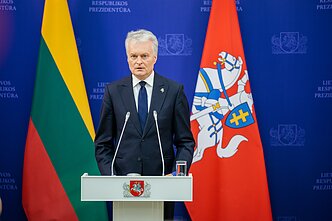






The existing ban on importing agricultural products from Russia and Belarus must stay, Foreign Minister Kęstutis Budrys says as Lithuania’s parliament, Seimas, is debating the government’s proposal to extend the existing national sanctions on Russia and Belarus.
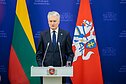
“This restrictive measure is necessary, it is effective and, after all, the European Union is moving together in the same direction by raising tariffs on such goods. We do not want them to be here,” Budrys told reporters at the Seimas on Tuesday.
He was speaking after the majority of the Nemunas Dawn party’s 19 representatives in the Seimas voted against the proposed one-year extension of the sanctions during the first reading last Thursday. The proposal still passed.
The Nemunas Dawn representatives say they objected to the extension because the law includes a ban on the imports of agricultural products and animal feed originating in Russia or Belarus.
Meanwhile, Agriculture Minister Ignas Hofmanas, who is also from the Nemunas Dawn party, says he supports the ban and that Lithuania has the moral right to impose it.
Budrys says the rest of the sanctions have to do with Russian and Belarusian citizens, not businesses.
“It [the restriction on agricultural products] should be discussed then, but not to be lumped together with all the sanctions,” the minister said.
“We have tabled the bill, [...] the government debated and tabled it and we believe that it’s balanced and appropriate,” he said.
The current version of the sanction law expires on May 3, and the government is proposing extending it until May 2, 2026.
The law suspends the issuance of visa applications and residence permits for Russian and Belarusian citizens in Lithuania, provides for more detailed border checks, prevents Russian citizens from buying real estate in Lithuania, etc.
The government is proposing extending the sanctions without any changes.
Questions over coalition commitments
With support for Ukraine being a key pledge in the ruling coalition’s agreement, the failure to back national sanctions on Russians and Belarusians raises questions about coalition partners’ commitment, Social Democrat Juozas Olekas, the first deputy speaker of the Seimas, said on Wednesday.
“I think my colleagues acted irresponsibly – this is a flashing red light,” he told the Žinių Radijas radio station, commenting on last week’s vote to extend the sanctions.

“There are certain limits – national interests require us all to find common ground. It doesn’t matter if you’re in the opposition or the ruling majority, and especially if you’re a coalition partner – you have to take these matters very seriously,” Olekas said.
Support for Ukraine is declared a top priority in the coalition agreement signed by the Lithuanian Social Democratic Party, the Democrats “For Lithuania”, and Nemunas Dawn, as well as in the government’s programme.
According to Olekas, such votes reflect the strength of the coalition.
“If someone doesn’t back these principles in a vote, then we apparently have to think about what comes next because there are many other votes ahead. [...] Either we reach an understanding in the coalition council, or we’ll look for other solutions,” he added.
He said efforts would be made to explain the situation to the coalition partners to prevent similar missteps in the future.
Prime Minister Gintautas Paluckas called the coalition partners’ vote “a misunderstanding” and said he hoped Nemunas Dawn MPs would change their stance.
Nemunas Dawn leader Remigijus Žemaitaitis, who abstained from the vote, explained that his political group in the parliament did not support the bill because it keeps in place a ban on agricultural imports.

Newsletter
Every Friday morning.