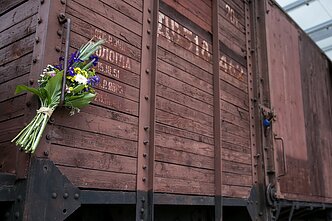












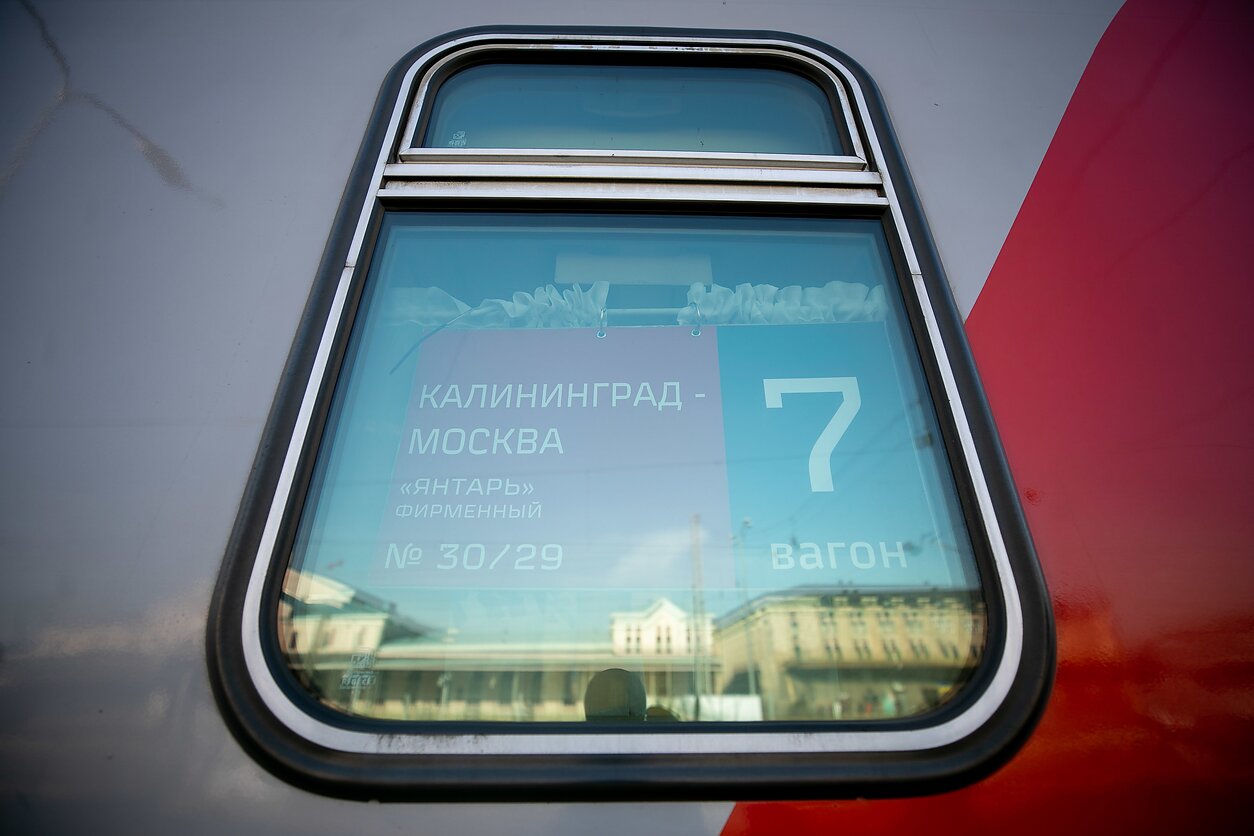
Lithuania has partly closed rail transit to Russian goods to and from its exclave of Kaliningrad. Now, Russia has promised to react, igniting fears over the so-called Suwalki Gap.
On Monday, Kremlin’s spokesperson, Dmitry Peskov, said the decision was “unprecedented” and “in violation of everything”. He added that the ban on sanctioned goods “required deep analysis before Russia takes action, it will be done within days”.
Read more: Russia says Lithuania’s transit ban 'violates everything'
The news was first announced on Friday evening, with the governor of Kaliningrad saying the region would lose 40 to 50 percent of its transit goods.
“We consider this to be a most serious violation [...] of the right to free transit into and out of Kaliningrad region,” Anton Alikhanov said in a Telegram post.
However, the government had kept largely quiet until the news broke on the Russian side.
On Saturday, Deputy Foreign Minister Mantas Adomėnas said the country was still awaiting “clarifications” from the European Commission on the application of the EU sanctions.
Read more: EU says Lithuania acted ‘by the book’ in Kaliningrad transit standoff with Russia
In the run up to the Foreign Affairs Council in Brussels on Monday, Lithuanian Foreign Minister Gabrielius Landsbergis said the country was only enacting EU sanctions.
“First of all, it’s not Lithuania doing anything, it is the European sanctions that started working from June 17. The industry that is imposing the sanctions are the [Lithuanian] railroads, they informed their clients that [...] sanctioned goods [...] will no longer be allowed to transit Lithuania,” he said.
“It is done in consultation with the European Commission and under [their] guidelines,” Landsbergis added.
Later on Monday, however, the European Commission declined to comment, referring the matter to the EU Foreign Affairs Council.
Read more: Lithuania hands note clarifying Kaliningrad transit to Russia
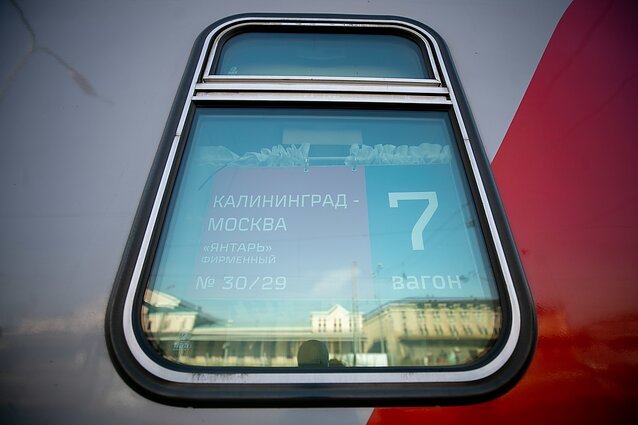
The current rail transit, ferrying both goods and passengers via Lithuania, is the result of an agreement between Brussels and Moscow. In the early 2000s, with Lithuania moving toward the EU and NATO, Brussels secured a deal with Moscow on the transit of passengers and freight.
The Kremlin accepted, although it had previously attempted to pressure Lithuania into agreeing to a military corridor or a continued Russian troop presence, which would have essentially grounded the country’s NATO aspirations to a halt. The simplified transit mechanism started operating on July 1, 2003, less than a year before Lithuania joined the EU on May 1, 2004.
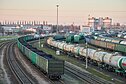
Now, Vilnius officials say the country can not impose any unilateral moves because of it. Around a hundred trains enter Lithuania from Belarus each month and continue via Vilnius onward to Kaliningrad.
Read more: Russia’s military corridor in Lithuania that never was
Although the head of Kaliningrad’s region claimed the ban will affect some 50 percent of all goods, the effects are yet to be established.
According to economist Marius Dubnikovas, Lithuania and the EU are trying to inflict damage on Russia due to its invasion of Ukraine. However, the reduction of rail transit is not a blockade, contrary to Kremlin's claims.
"This is not a complete isolation of Kaliningrad, because the region is located by the sea and is accessible both by sea and by air,” he told LRT.lt. “That does not mean that those goods will not reach Kaliningrad.”
In a comment sent to LRT.lt, the state-owned Lithuanian Railways said its infrastructure branch was enacting EU sanctions.
“Land transit between the Kaliningrad region and other parts of the Russian Federation is not suspended or blocked,” it said. “The transit of passengers and freight, the carriage of which is not restricted by sanctions, continues to be ensured.”
On Monday, Lithuania’s Customs Department also said the country “did not impose any unilateral, individual or additional restrictions on this [Russian] transit”.
The current ban on steel and other metal products is due to expand to include cement and alcohol on July 10, coal and other solid fuels on August 10, as well as oil on December 5.
Suwalki Gap fears
Any potential Russian reaction to seeing the route blocked focuses on the fears surrounding the so-called Suwalki Gap.
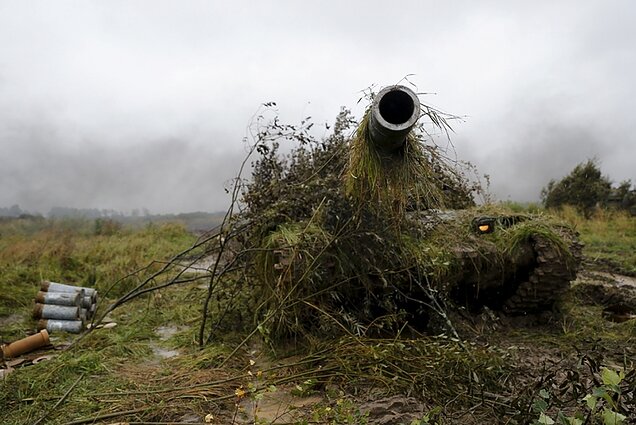
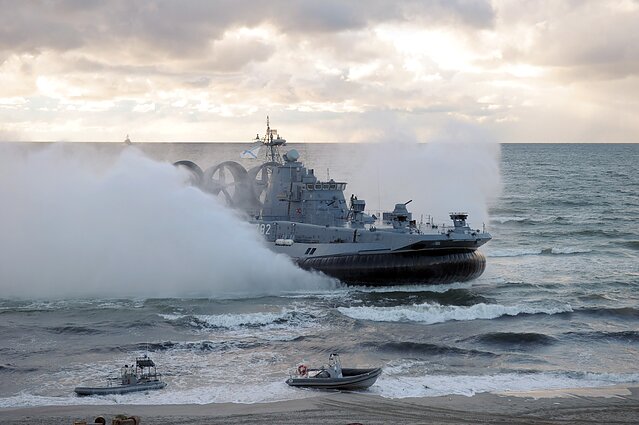
The small stretch of land, some 70 kilometres wide, separates Kaliningrad and Belarus and has also been dubbed NATO’s Achilles Heel.
Estonia’s former president, Toomas Hendrik Ilves, told Politico he had come up with the name to make NATO grasp the problem.
“It’s a huge vulnerability because an invasion would cut off Lithuania, Latvia and Estonia from the rest of NATO,” he told Politico in an article published on Monday. Kaliningrad is home to significant Russian forces, including the Baltic Fleet.
Read more: Poland and Lithuania to plan joint Suwalki Gap defence
According to Reuters, there have already been calls on Russian state media to open a land corridor between Belarus and Kaliningrad. This, however, would mean war with NATO.
In 2017 and 2021, the joint Belarusian and Russian war games simulated such a conflict, including securing this very corridor.
However, Finland and Sweden joining NATO would significantly alter the status of Suwalki Gap, Estonia’s top military commander said in a recent interview.
“Please, you [Russia] block my Suwalki, I block your Finnish Gulf,” Lieutenant General Martin Herem said.
“The Suwalki gap – gate, line, whatever – that is not only our problem. Next year, we will get the capabilities to cause a strategic dilemma for Russia,” he added. “We may close the Baltic Sea communication line [between Russia’s exclave of Kaliningrad and St Petersburg], and then the Suwalki gap is not a gap, [...] but they need it even more [themselves].”
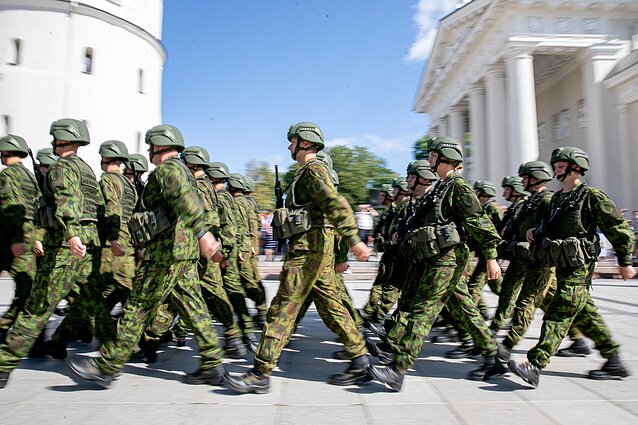
So what can Russia do? Several analysts have claimed the Kremlin may test NATO’s air defences over the Baltic states.
According to Politico, Russian exiled political scientist Ivan Preobrazhensky said Putin could fly civilian planes through the gap. Lithuania, along with the rest of the EU, has closed its airspace to Russian aircraft.
Putin could then threaten to shoot down NATO jets intercepting the civilian airliners, according to Preobrazhensky.
The same warning was echoed by Mikhail Khodorkovsky, a former oligarch and now a prominent Russian dissident.
“The next step is going to be the air blockade of Lithuania. It will allow Russian aviation to fly right through between Russia and Kaliningrad. Then NATO will face a question of what to do,” he told the Financial Times in an interview published on Sunday.
The Russian invasion of Ukraine has upped the stakes in the Baltics, with a former Russian prime minister as well as Western officials and experts warning the trio of Estonia, Latvia and Lithuania could be next.
“If he wins now in Ukraine, he will, because of domestic problems, start a war with NATO,” said Khodorkovsky. “And eventually he will lose that war.”
On Monday, Russia’s Foreign Ministry demanded Vilnius reverse its allegedly “openly hostile” move.
“If cargo transit between the Kaliningrad region and the rest of the Russian Federation via Lithuania is not fully restored in the near future, then Russia reserves the right to take actions to protect its national interests,” the ministry said.
Read more: Is Russia eyeing the Baltics, again? – opinion
With additional reporting by Robertas Macius, BNS, and Reuters.

Newsletter
Every Friday morning.